Week 1
With mounting excitement, we prepare for this month-long trip with the stated aim of crossing the Nullarbor, heading up into the Wheat Belt, down to Esperance and Albany and then back to Adelaide again. The penalty for this type of expedition is the rather significant kilometres to be driven between targeted destinations and fact that fuel will be our most significant cost.
Now that was the stated aim, but as with many expeditions’ flexibility is required.
Zipping up to Kimba on the Eyre Highway the day is sunny albeit a biting cold wind ensures warm weather gear is donned. We greet the Big Galah after setting up camp and enjoy our first night away from the “big smoke”. The next day it’s a short trip to Minnipa and onto Pildappa rock, the first sizeable granite outcrop on the agenda. Settling into a farmers paddock (below) we are amused to see several monster vans investigating the area with a view to an overnighter. As one may expect all reject it out of hand, as it is what is suggested, just a farmer’s paddock. These folk probably prefer to be cheek by jowl alongside many other likeminded members of the “vanners” club.
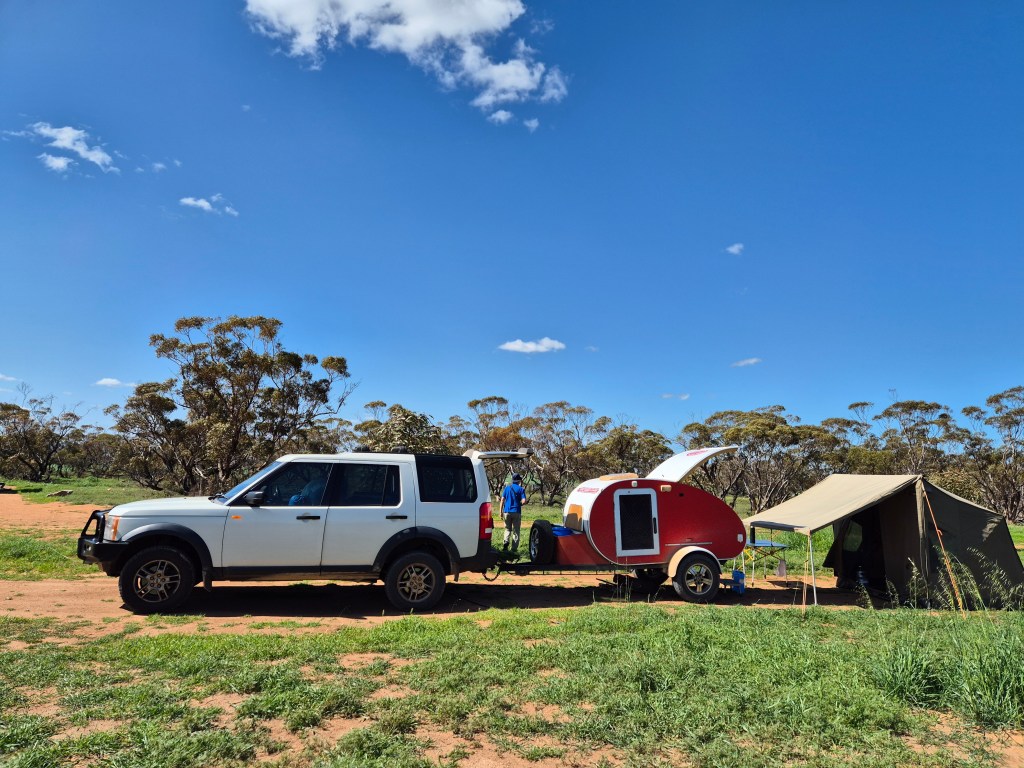
Now just to explain our rather basic camping gear. The vehicle is a Land Rover Discovery, which I have found to be excellent for heavy duty 4-wheel driving, and to which I have attached my Teardrop van. This 300kgm baby provides comfort for my ageing body overnight as I am well and truly past sleeping on the ground in a swag. The back pulls up to provide a kitchen zone. Behind is the Oztent where Judy settles in to sleep. It’s also our go to space on the cold nights with either a small powered fan or gas heater. It would be inappropriate to be collecting wood and lighting fires on this trip as we are in slightly more civilised zones. Next time!
The afternoon is spent exploring Pildappa rock, which is quite majestic. A confession here…I am “into” big granite outcrops as they and the surrounding ecosystems are quite unique.
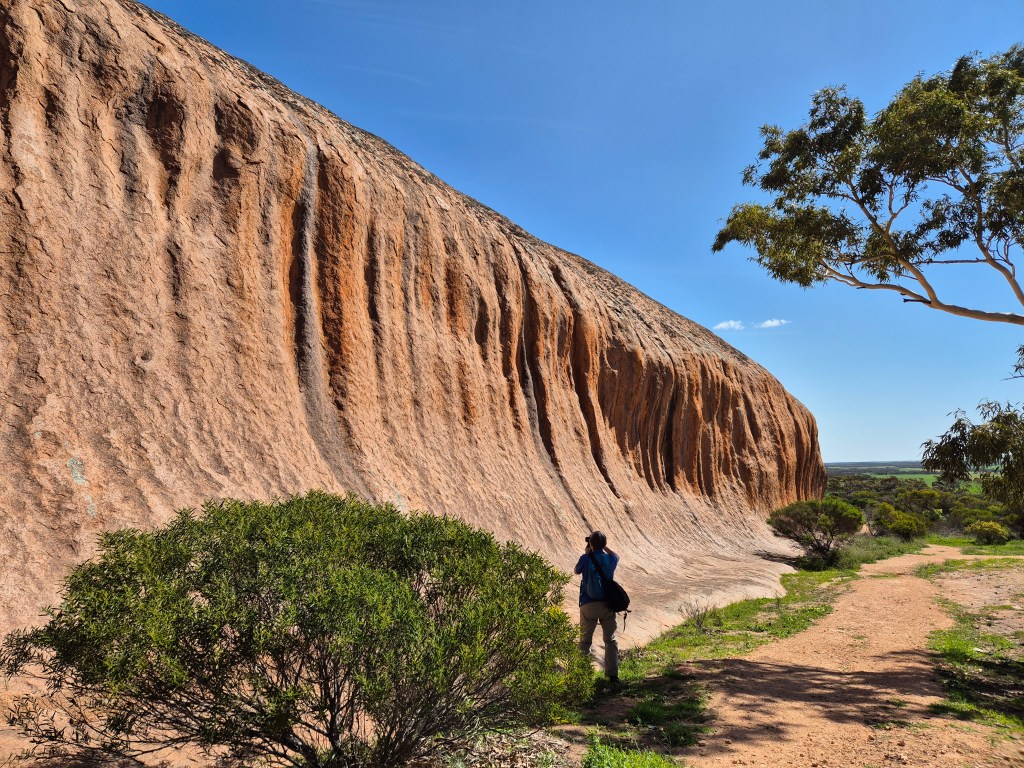
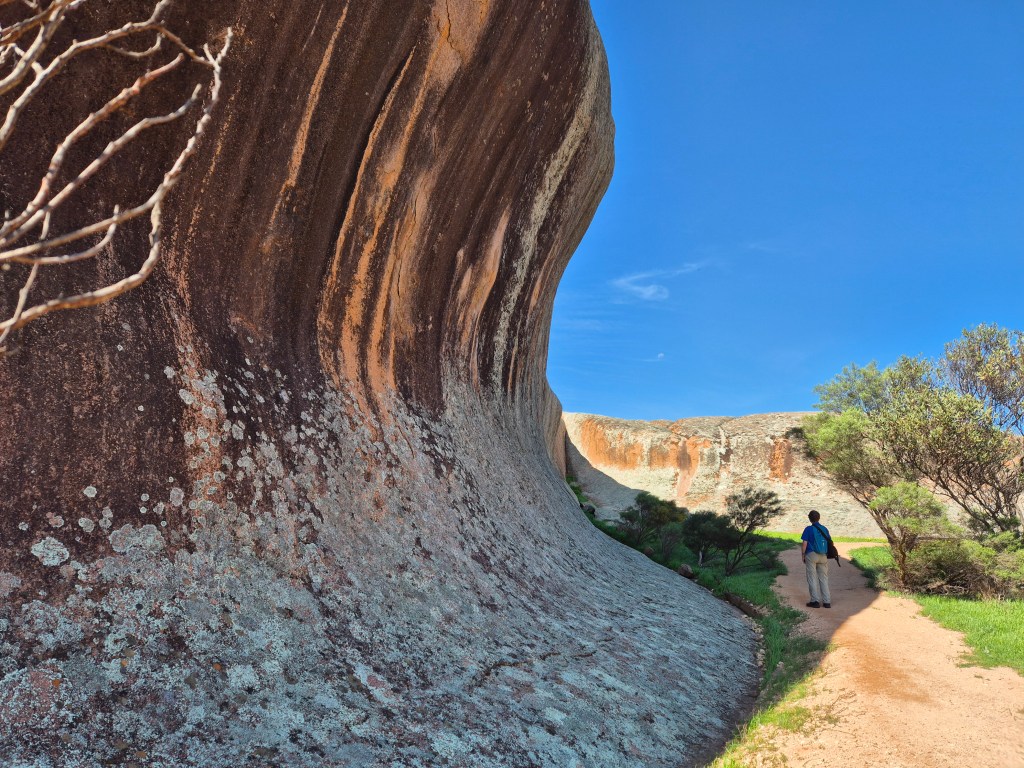
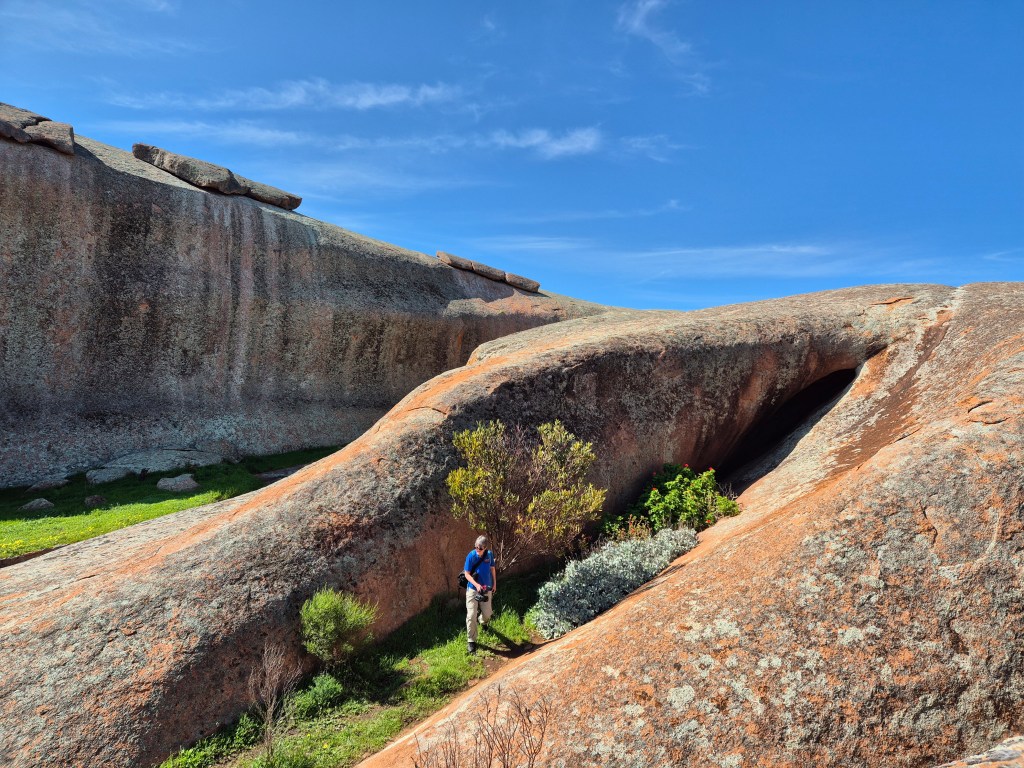
Apparently, a Polish families children planted Geraniums close by on their farm in about 1923. The Kwaterski’s therefore have a nice legacy with these same plants in various valleys around the base of the rock.
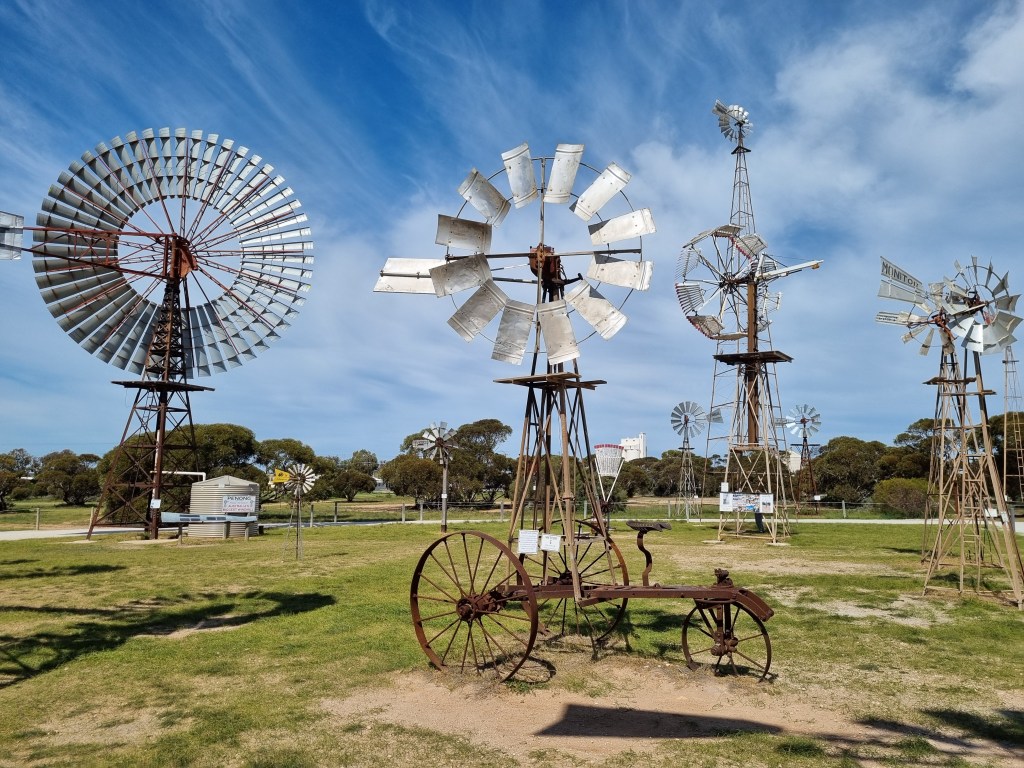
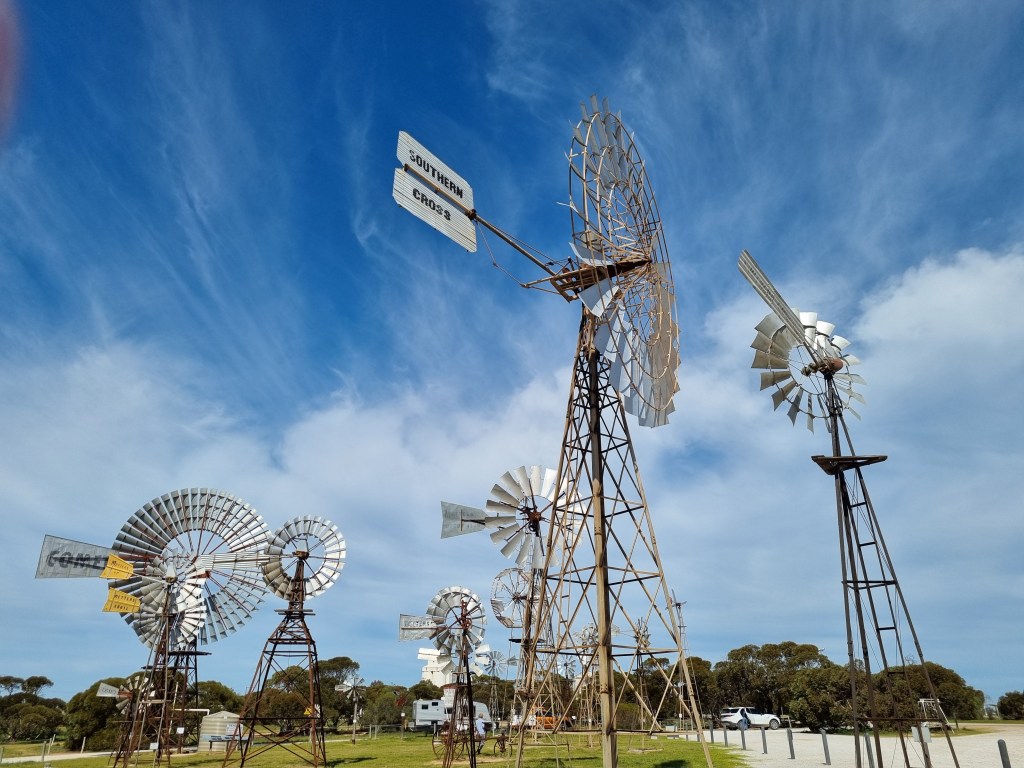
Heading West after our overnighter one would never pass by Penong without a quick visit to the Windmill Museum. The enormous Comet windmill shown here is reputed to be the largest in Australia. You do need to compare it to the trees and other structures around to fully appreciate just how big it really is.
Wild and woolly weather is approaching from the West (thanks Perth). Settling in at Cocklebiddy campground we are dwarfed by monster vans and deluged by rain. Yes, I am the titchy red “thing” nestled uncomfortably between a few of the many surrounding us. I any event we plan to stay here for a couple of nights to explore the famous Cocklebiddy caves close by.
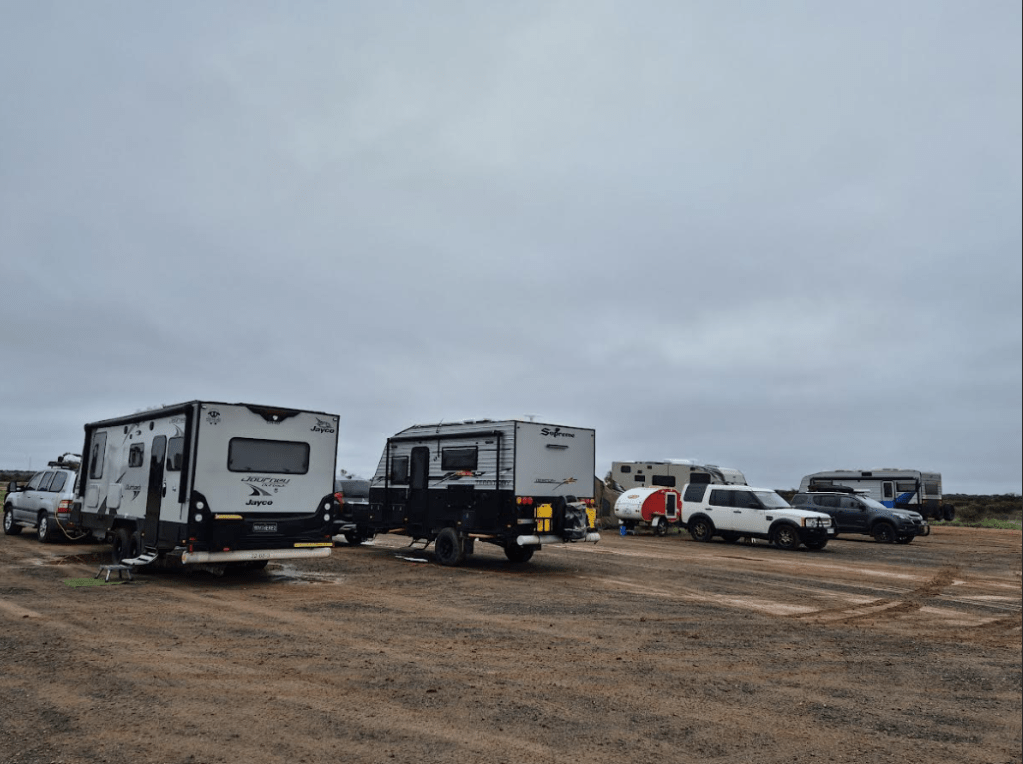
Now given the weather and the fact that the road out to the caves we want to explore will be awash we decide discretion is the better part of valour. So, travelling to Norseman we settle down for a couple of nights to visit Beacon Hills and Dundas rocks. Then it’s a bee line to Wongan Hills a town reputed to be at the centre of the wildflower zones in WA. Given the massive display of Wattles, Senna and other colourful plants along the roadside we reckon this may well be true. For interest there are well over 200 Wattle species in this wheatbelt.
Week 2
The Wheat Belt in WA is said to be the largest production area of this crop in Australia. Sounds right given the vast fields of vibrant crops we see.

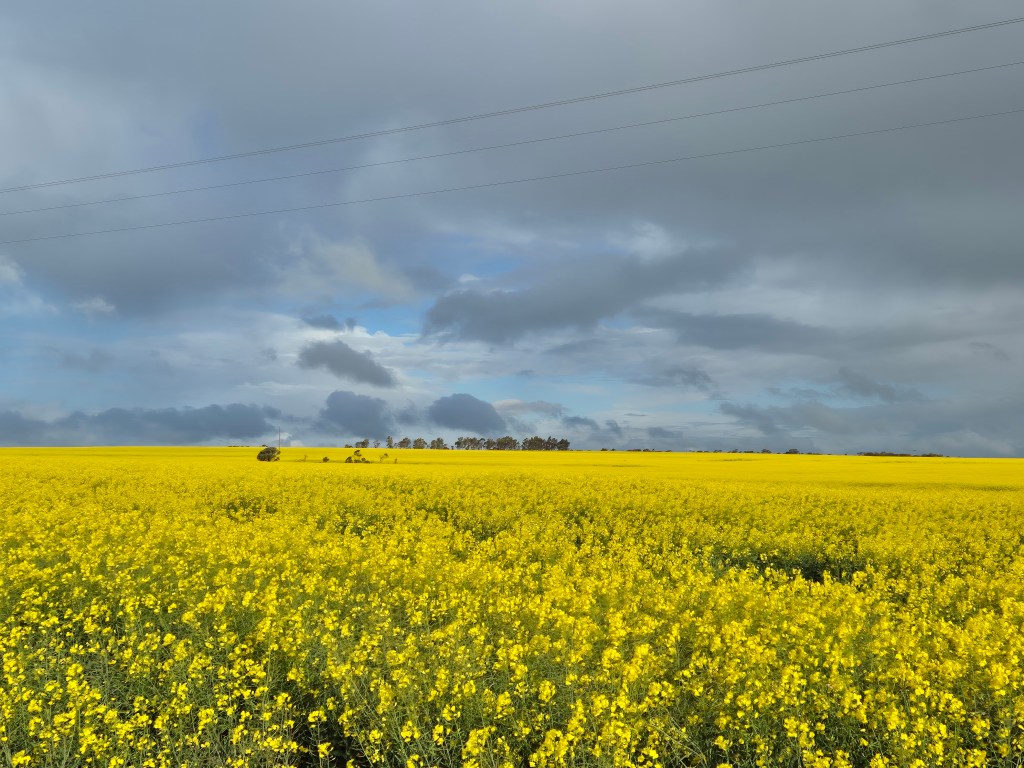
What we didn’t expect though were the equally large areas planted with Conola. A retired farmer suggested that Australia is over producing wheat and cannot sell it all at a good price…hence the transition of many fields to this alternative crop. I just hope the market for this oil is a good one.
Rain is back on the radar and as we set up camp at Wongan Hills it’s to downpours and mud. Oh well! To complicate matters our goal of visiting Esperance and Albany may require a rethink as the forecast there looks nasty and I have no intention of being wet wet wet every day. We know there are many things to do in this town and surrounds so let’s see how things go over the next wee while. First on the agenda as clouds clear the next day is the Gathercole Nature Reserve. In theory this 2.2km loop trail should be managed quickly. But the wildflowers and birds (yes we are Birders) are so amazing that we spend quite some time roaming around the granite formations and checking out the landscape, wildflowers a
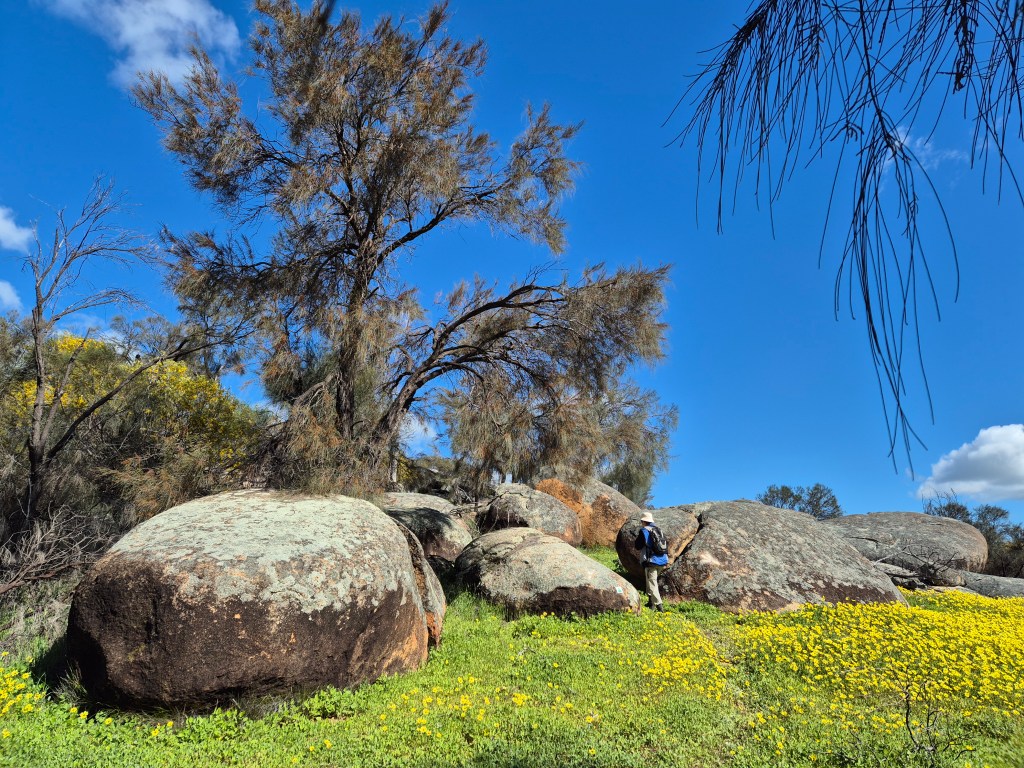

Of particular interest to me is the Eucalyptus Caesia or Gungurru aka Silver Princess seen mostly in granite rock zones in WA. The bark sheds as curling flakes and is very attractive.
The next day its onto the Mount Matilda walking trail, a mountain walk with great views of the crops and local granite outcrops. Again a large variety of wild flowers.
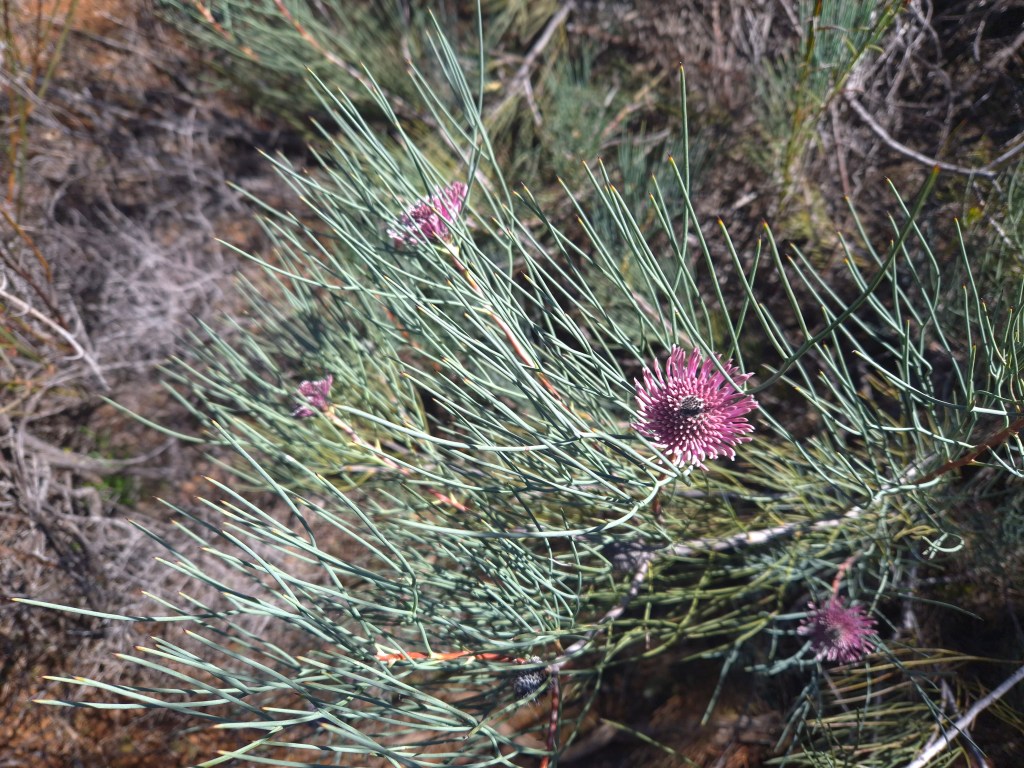
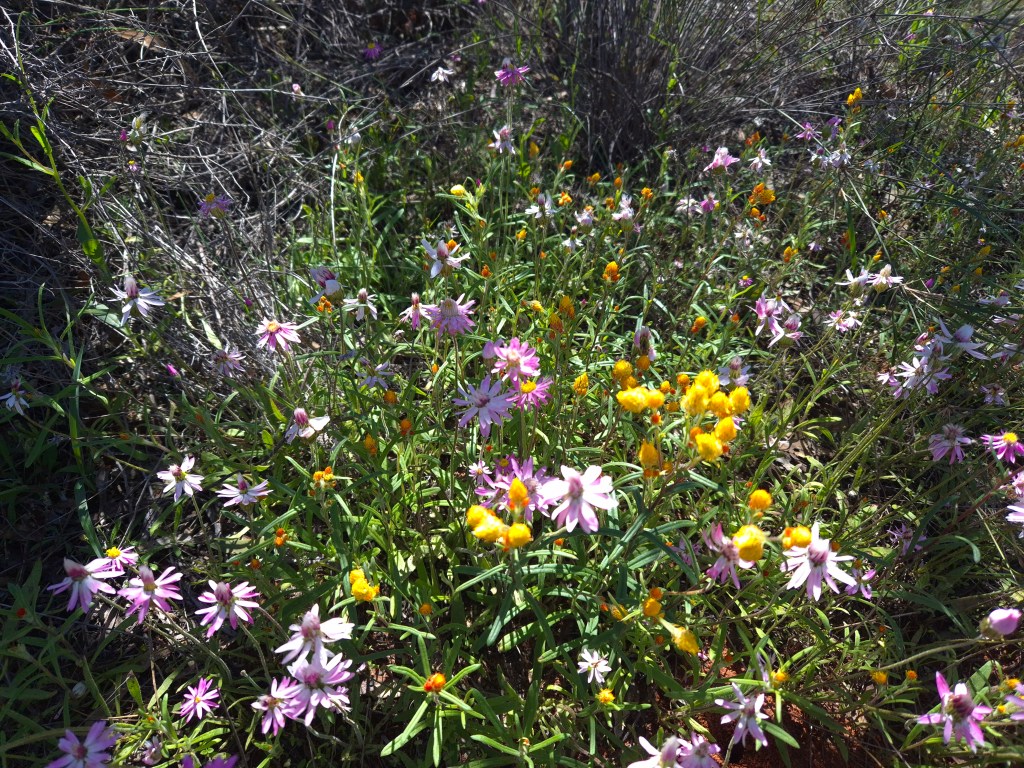
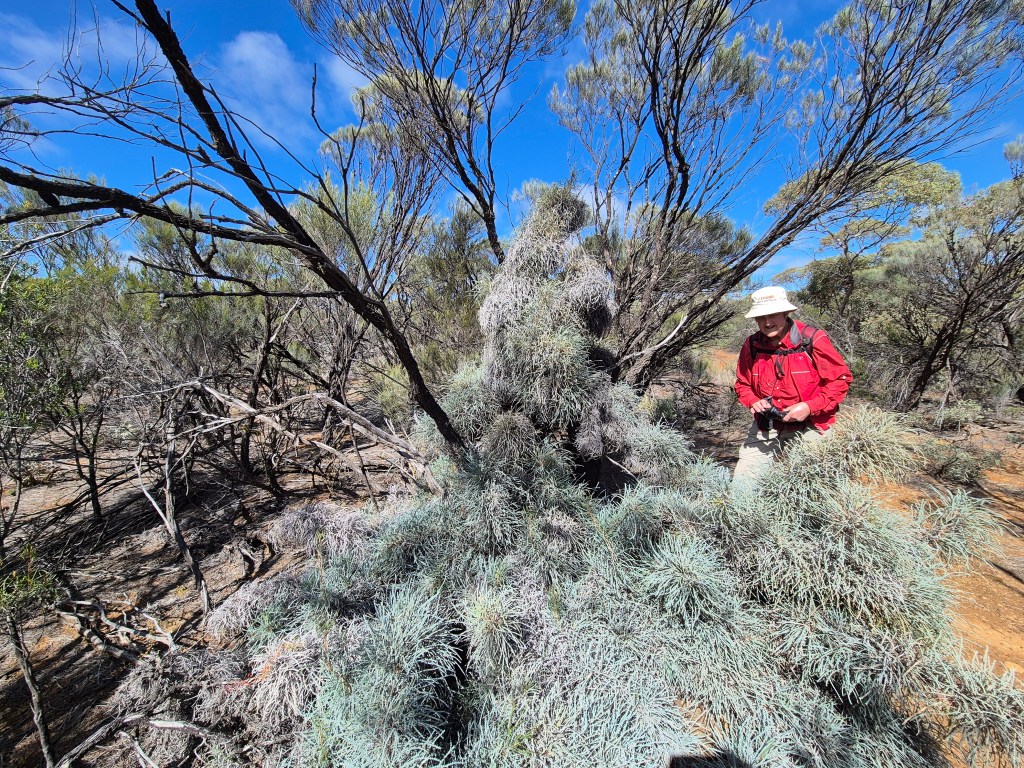
Oh my…is this shrub a Triffid?…as in the Day of the Triffids (the Book). You assure me its not…ok then let’s try a Silver Wongan Dryandra.
Time for a bit of an expedition its onto Dalwallinu and Jibberling Nature Reserve the next day. One can’t help but noticing the vast expanses of salt damaged plains, and this no doubt owes its existence to the clearing of woodlands for cropping historically. I search for birds in the water pooling for vast distances but there are none. On tasting it, the reason is obvious. No self-respecting bird would land anywhere near this salt damaged water way.
Further North is the small township of Wubin where we hear stories of a rare plant called a Wreath Flower. It seems people travel vast distances to see this, and we are close by. So off we trot, but not before visiting the towns museum which is all about the beginnings of the Wheat industry. Lots of the old equipment, pictures and artifacts.
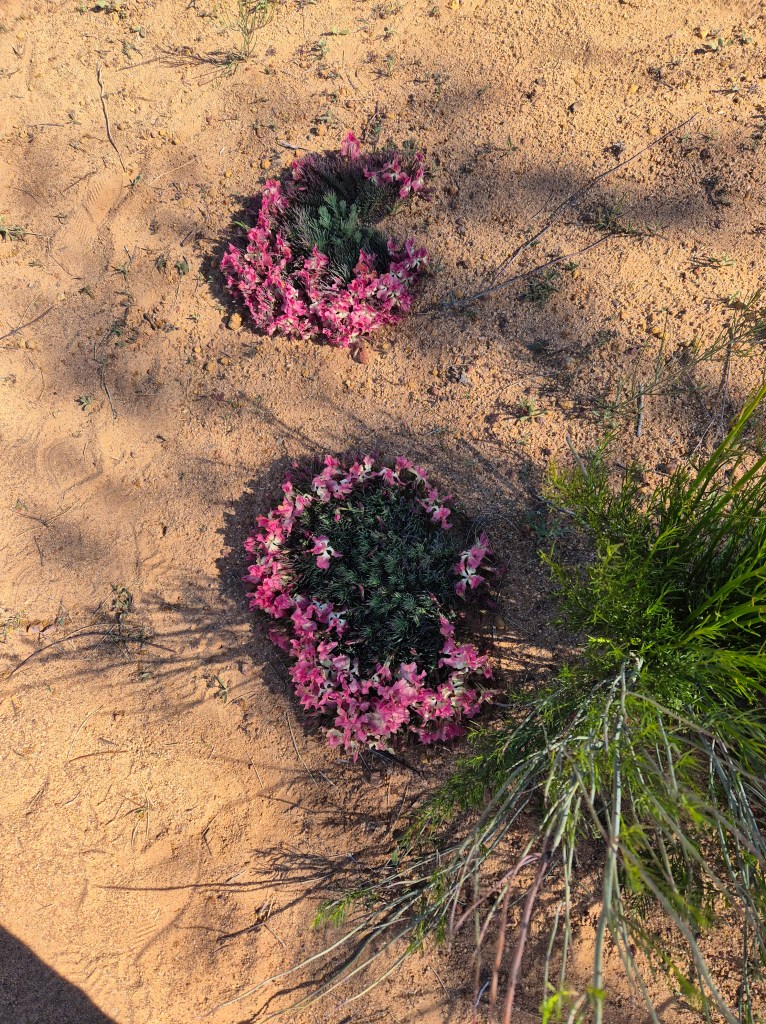
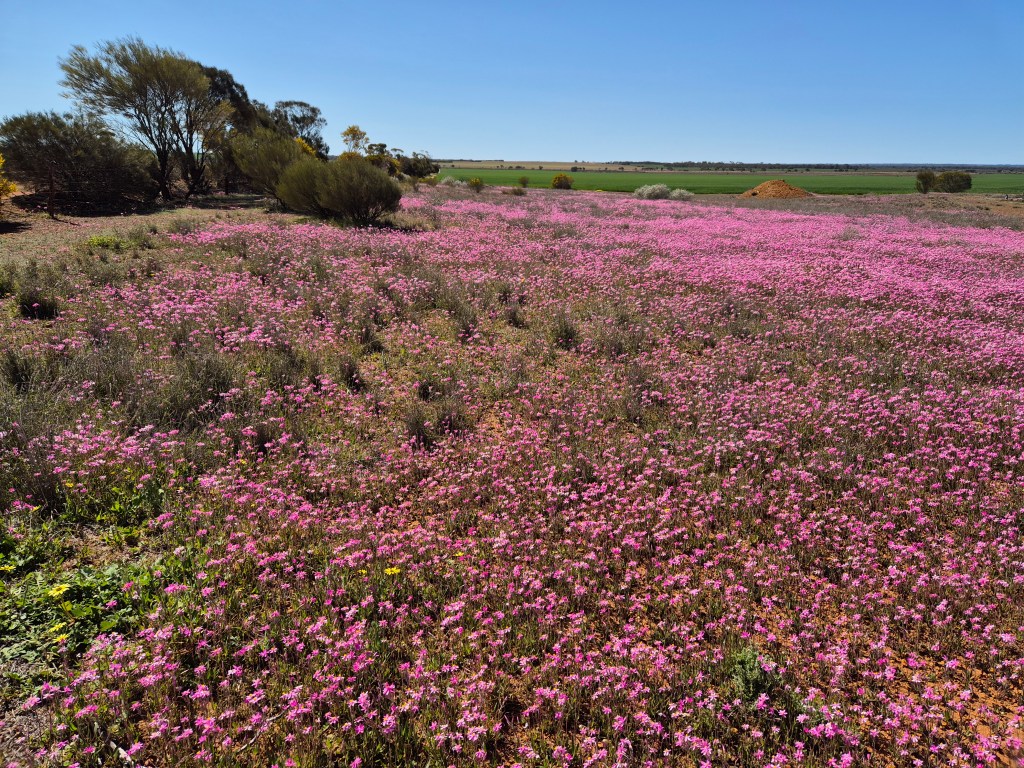
The Flower itself is about a foot wide and sure looks like a wreath. It’s a plant seen in only 3-4 countries in the world and you do have to travel to specific areas to be lucky enough to see it. The flower is obviously setting the tone for a purple vista
On the way back to Wubin we manage to find remnants of the Rabbit Proof fence. Hundreds of kilometres of fencing built many years ago to keep the rabbit plaque down South from affecting the Northern areas. Sadly, it failed to do the job, but if you are keen there are some posts and wires still in the ground for your musings over the great effort made for little outcome.
Back at home base we hear of a storm coming through with fierce winds. So, its batten down the hatches of the tent and hope we don’t have to retrieve it from the scrub later. The rain is set to persist especially around Albany so with lots of other things to see here we will just stick around for a few more days…after all the Bakery Coffee lounge is just great.
Regardless of the weather we trot out to Dingo Rock where we are greeted by giant mossies and flies…ok time to go! Of more interest though is the Elphine Nature reserve where manmade nests have been constructed to give Carnaby Cockatoos a hand with family affairs. These beauties fly past and say hi each night at dusk and we would be delighted to see them at home. We head to the reserve and as luck would have it, and after some exploration one pops its head out of a nest and is the subject a “clickathon”. Now in case you think we are over the top, this gorgeous bird resides in a very narrow strip in WA, and we just happen to be here. In SA we often see the Yellow Tailed Black Cockatoos in the hills and their call and flight pattern is equally impressive. But the WA member of the family needs a helping hand, and the locals have risen to the occasion.
It’s yet another bleak, windy and unpleasant day we awaken to, but we will head to Dalwallinu where there is an Arts and Crafts festival and then if the rain dissipates for a wee while onto Buntine Rock. The festival is truly amazing and there can be no doubt many talented artists exist in these areas.
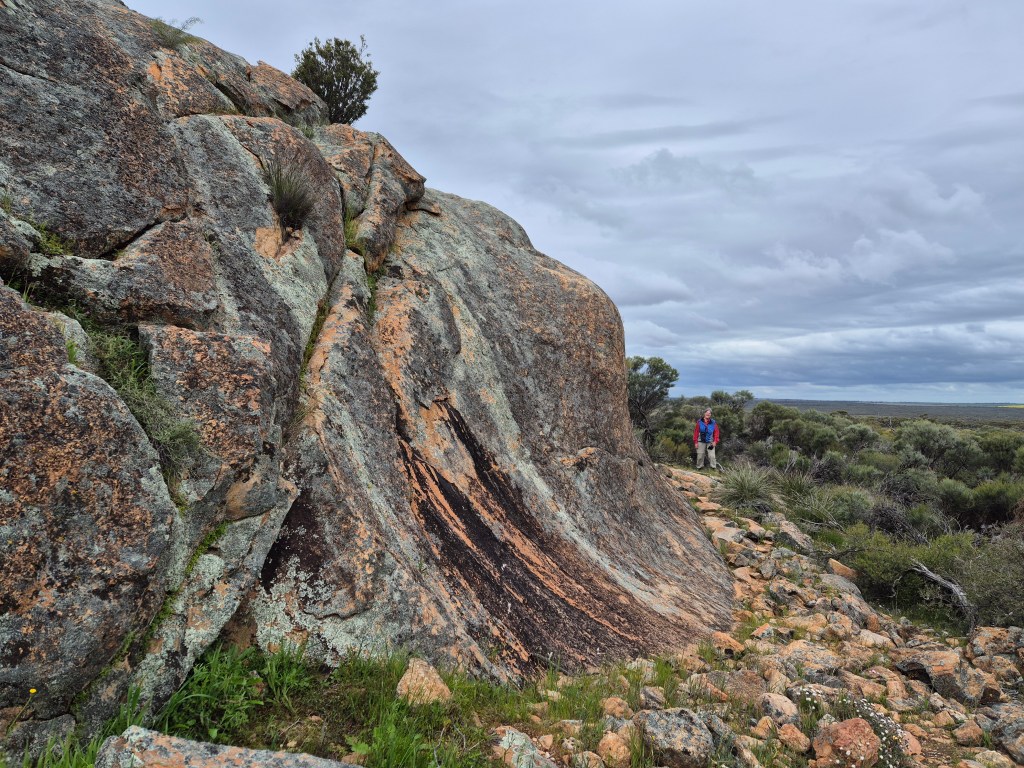
The rain tapers off so its to Mia Moon reserve and then Buntine rock. The latter is large and fun to explore. Perhaps its a prelude of things to come as far as granite outcrops go.

Week 3
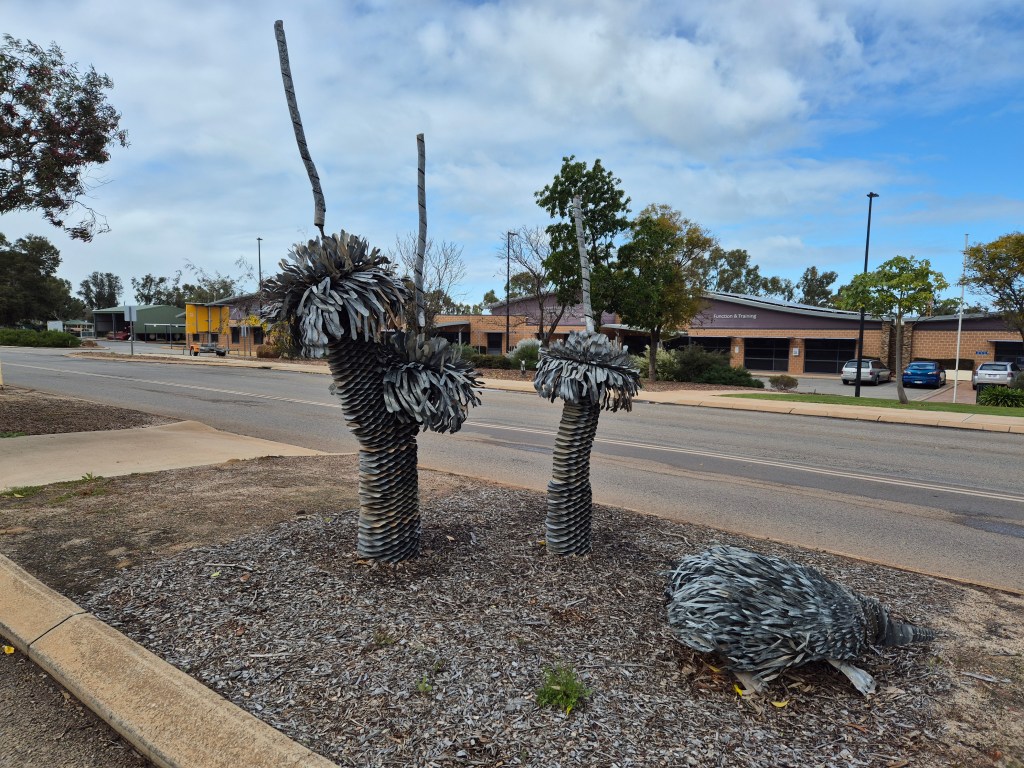
Its probably time to move on, so after 6 nights in Wongan Hills, and much exploration we head further South with a view to visiting Wave Rock. Yes, Esperance and Albany have been given a miss. Wave rock is near the small town of Hyden, which gets much of its water from that massive rock in the same way our forbears collected it in past years. They accomplished this by by putting stone barriers around the edges of the granite dome so that water is channelled into a collecting point of some type…clever. Camping at Kondinin we drive through Hyden where we are delighted to see more art, of a metal variety. Metal art is a “thing” in WA and every township seems to have its own version of it.

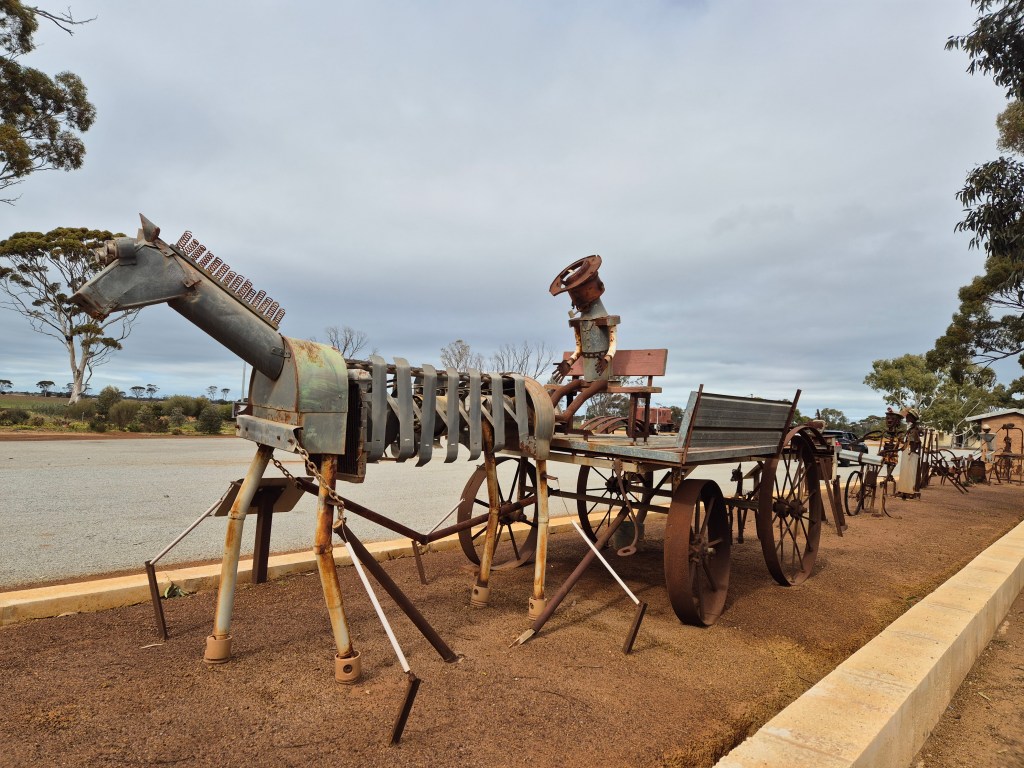
To demonstrate those below were in the main street of Wongan Hills.

Wave rock is probably one of the most “touristy” granite rock formations. In truth others are just as spectacular but as we are here let’s do it. It is an impressive wave and climbing to the top we see how the local dam gets filled during rainstorms. That rain is again not far off, and we see the very dark band coming our way. So, let’s walk quickly back to the car for protection against the deluge that does indeed dump on us as we drive back to home base. Happily, our tent is still standing.

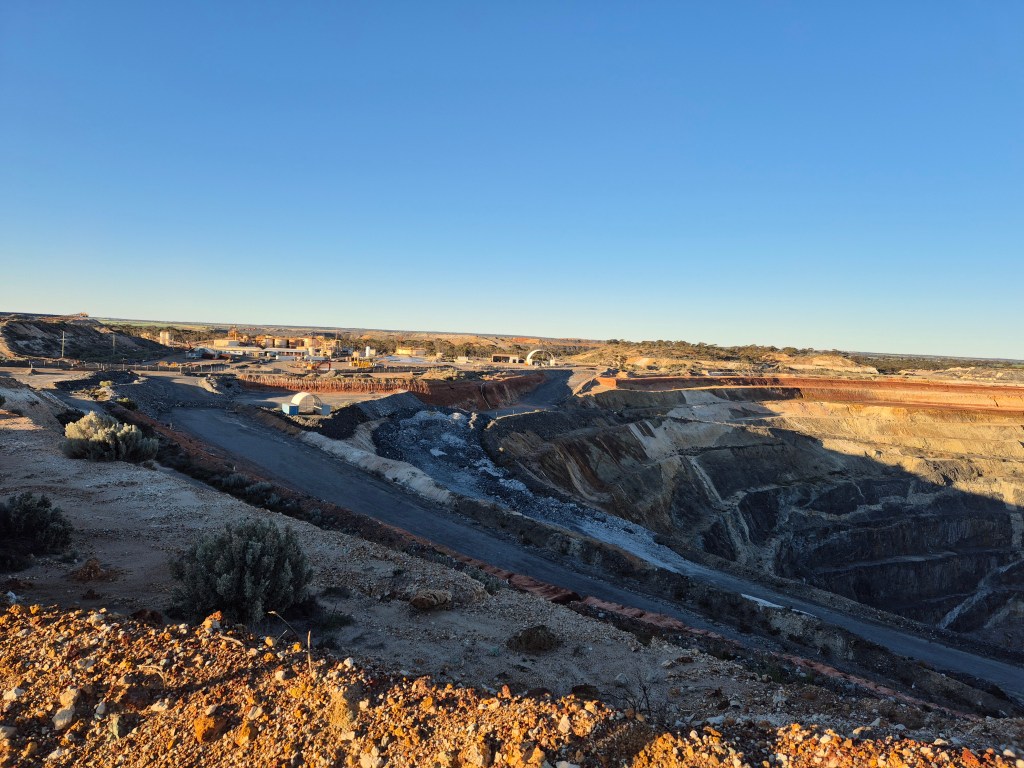
The advice from seasoned tourists to these areas is to visit and spend time at Westonia, the township near a closed goldmine. Now this closure is a recent event, and it is hoped that the mine will reopen in the future. The township is an absolute delight as all buildings are constructed to mirror those in existence in the early days. As the weather is now stable and likely to be for a wee while we will visit three areas, being Baladjie Rock, Sandford rocks, and Elachbutting Rock. Yes …all granites.
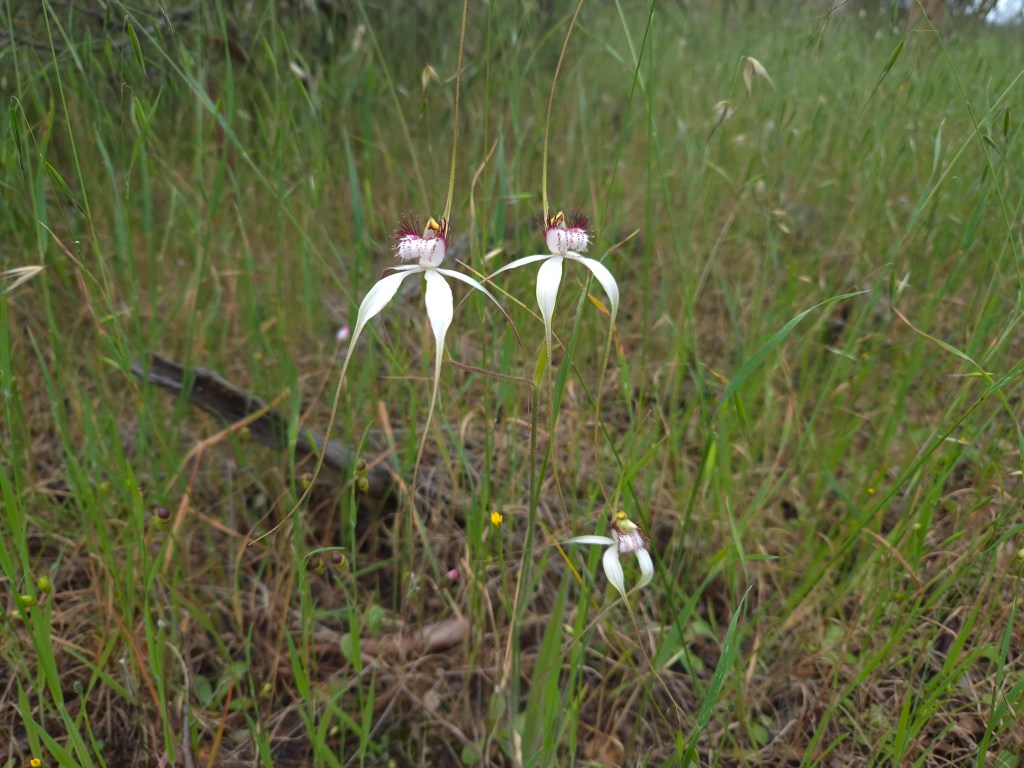
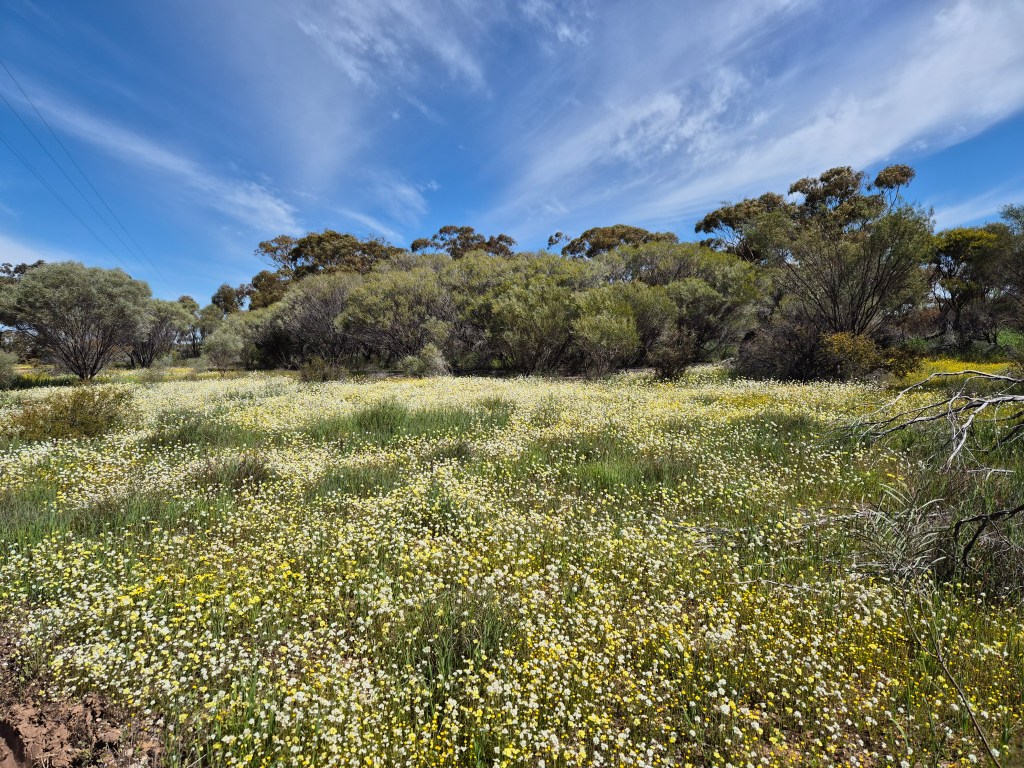
Flowers are just around us by the dray loads, including orchids…but this is why one visits these areas of WA at this time of the year. Baladjie rocks were interesting not only because of the colours of lichen etc on the rocks, but the trees around the area looked so stately and yet we did not have a clue as to their identity. We thought they may be a Casuarina but on further examination it proved to be a Calycopeplus Paucifolius. So there!

The Sandford rock area was fun to walk around and up (below).
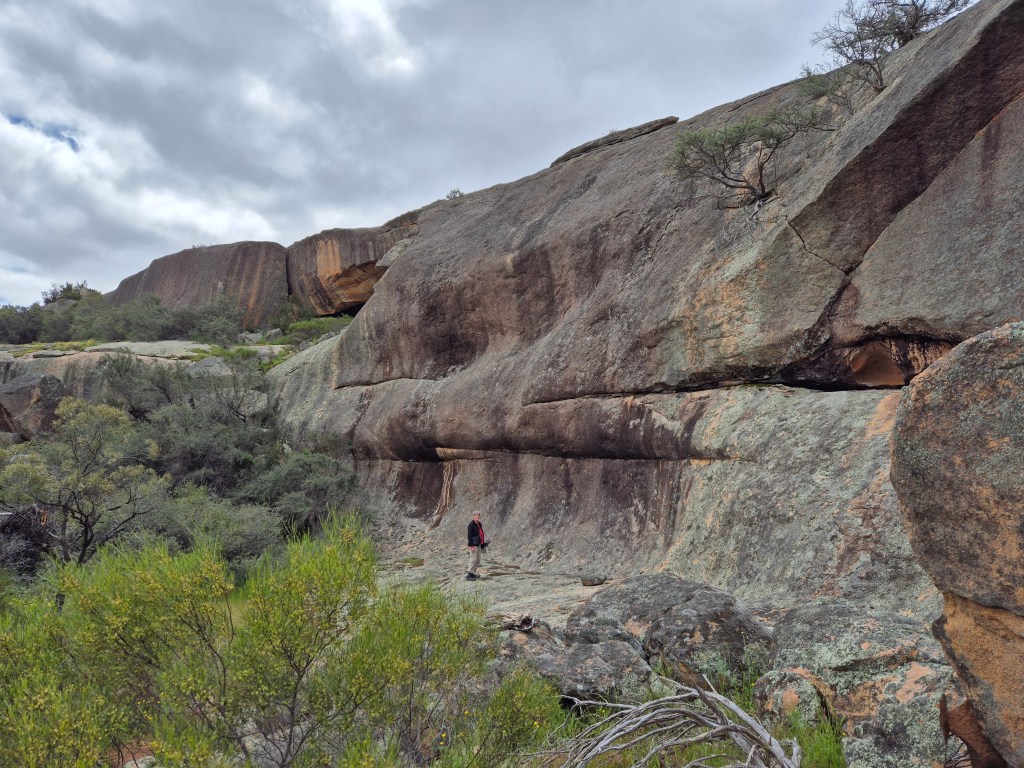
The other “biggie” was Elachbatting rocks, which sported its own Rock wave, Echo cave and Montys pass.
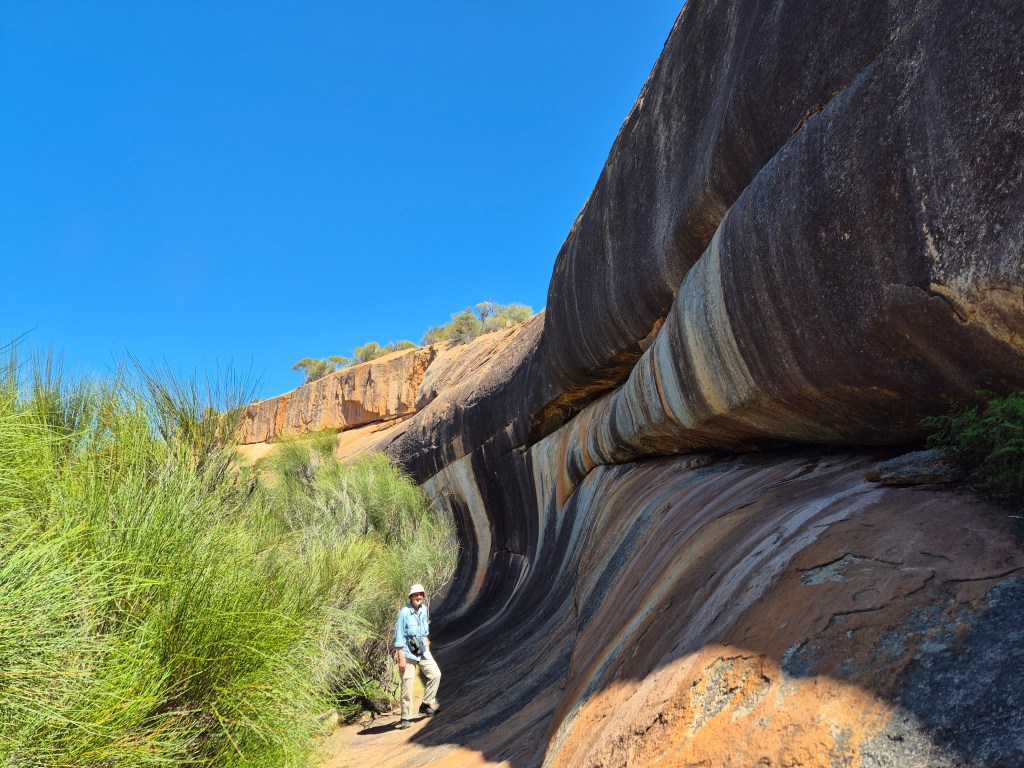
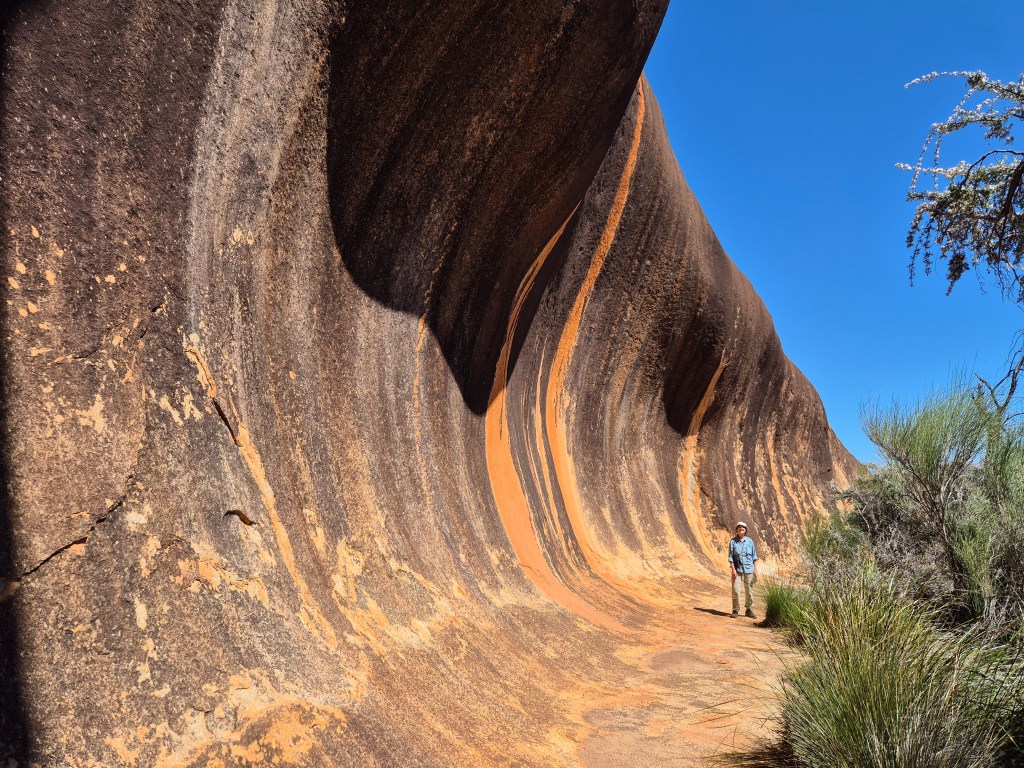
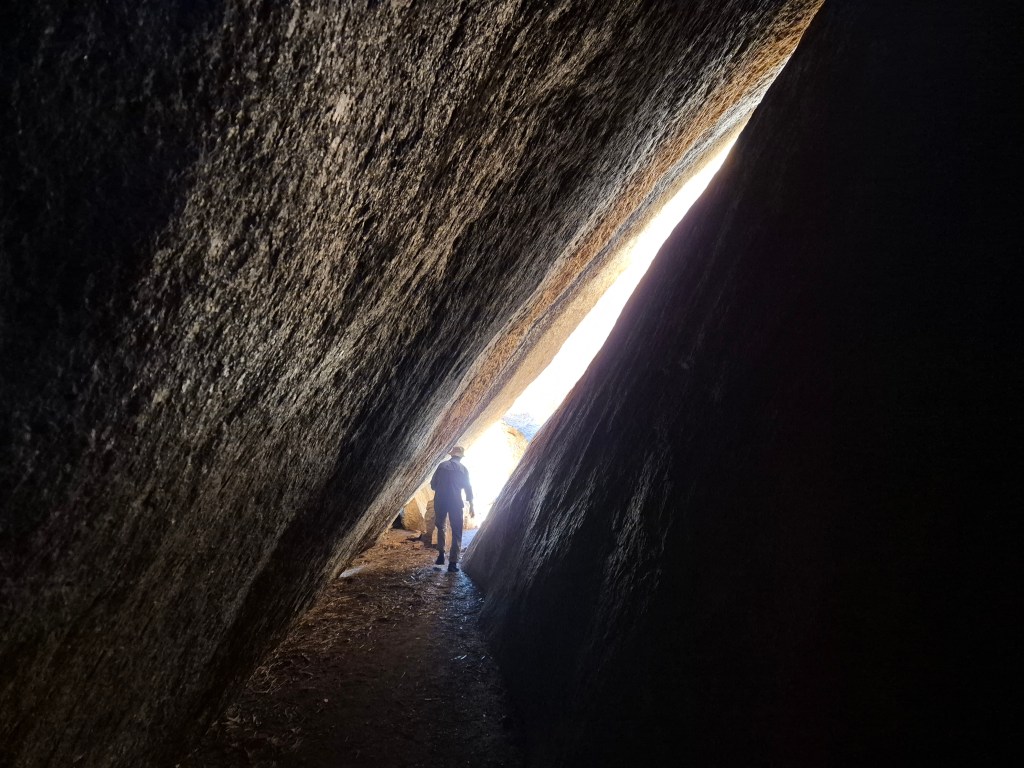
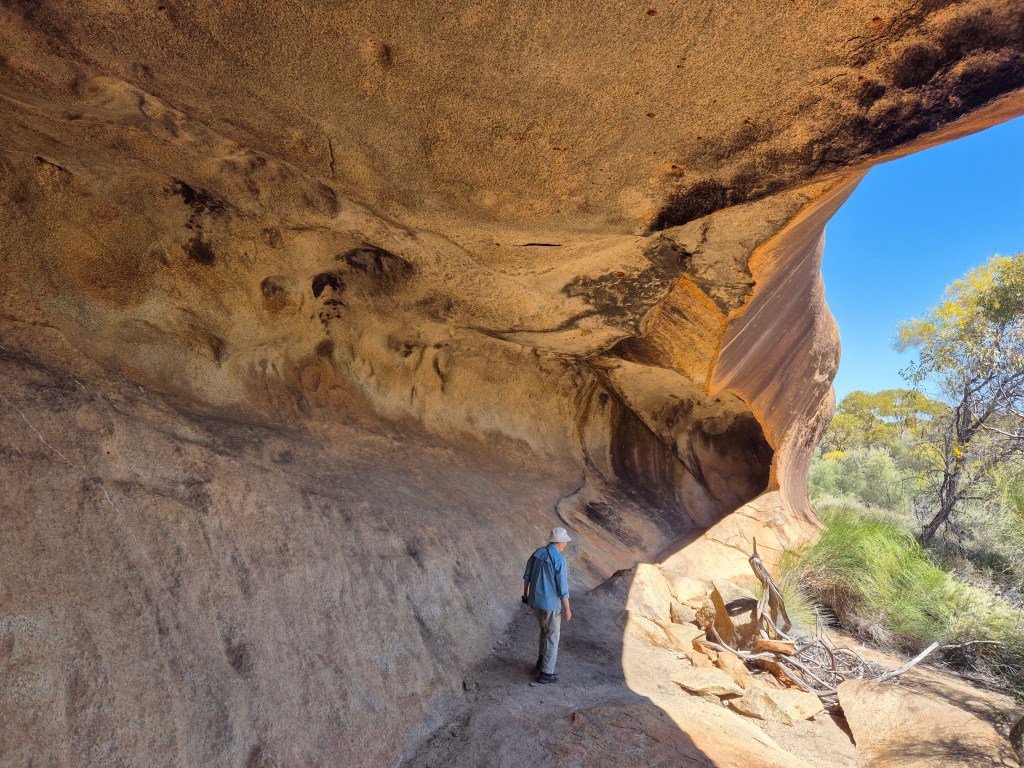
All in all very scenic.
Week 4
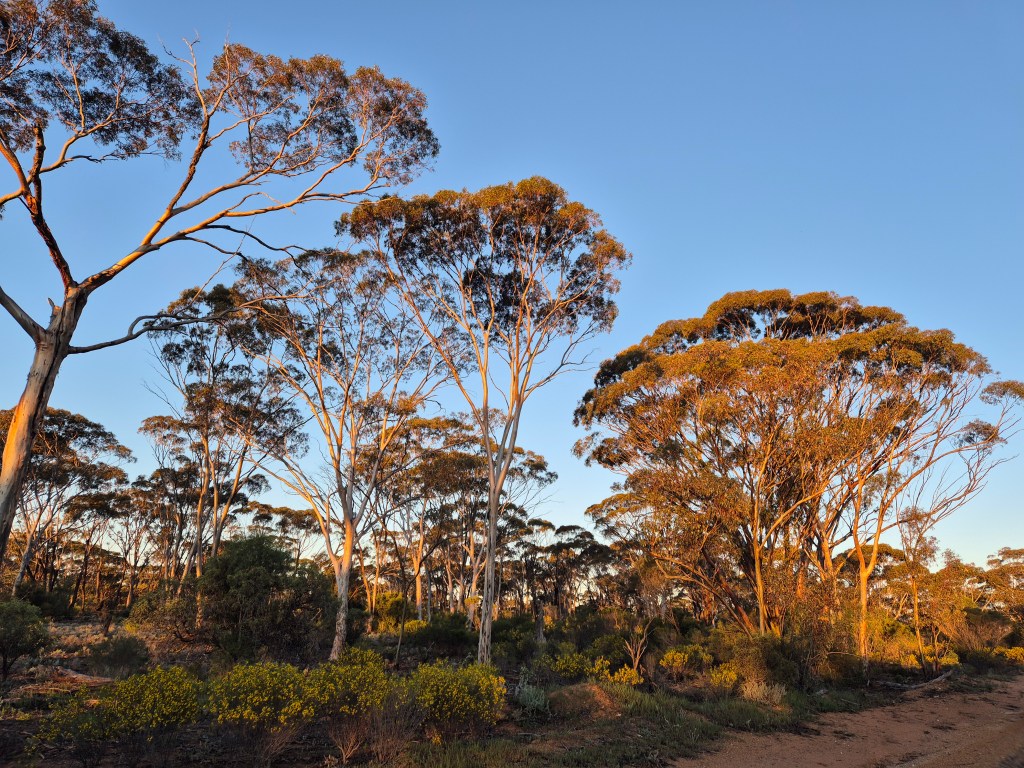
Our last day in Westonia is time enough to walk the Heritage trail. An area that highlights the old mining township which has gradually made its way into the soil, but which is surrounded by Gimlet and Salmon gums, lots of Melaleucas, Wattle and Senna. And of course myriads of wild flowers. For interest Salmon gums in these areas are mostly white and not the rich salmon colours we see around the Norseman region.
Of course, we cannot leave Westonia without taking a snap of the Edna May Goldmine and the magnificent gums that are such a stately presence in these WA regions.
So its now time to start heading South and East. The Nullarbor beckons. Staying at Balladonia, Eucla and Kimba after long days of driving we are within striking distance of the Mallee and my property in the Riverland for the big “clean up” before heading to Adelaide. It’s been another interesting experience visiting regions new to us. I have to say the variety of ecosystems in Australia is always a joy to behold.
Distance travelled : 9500kms. Cost of the trip: around $2000 for each of us. Much of this was for fuel.
 Tramping and Camping