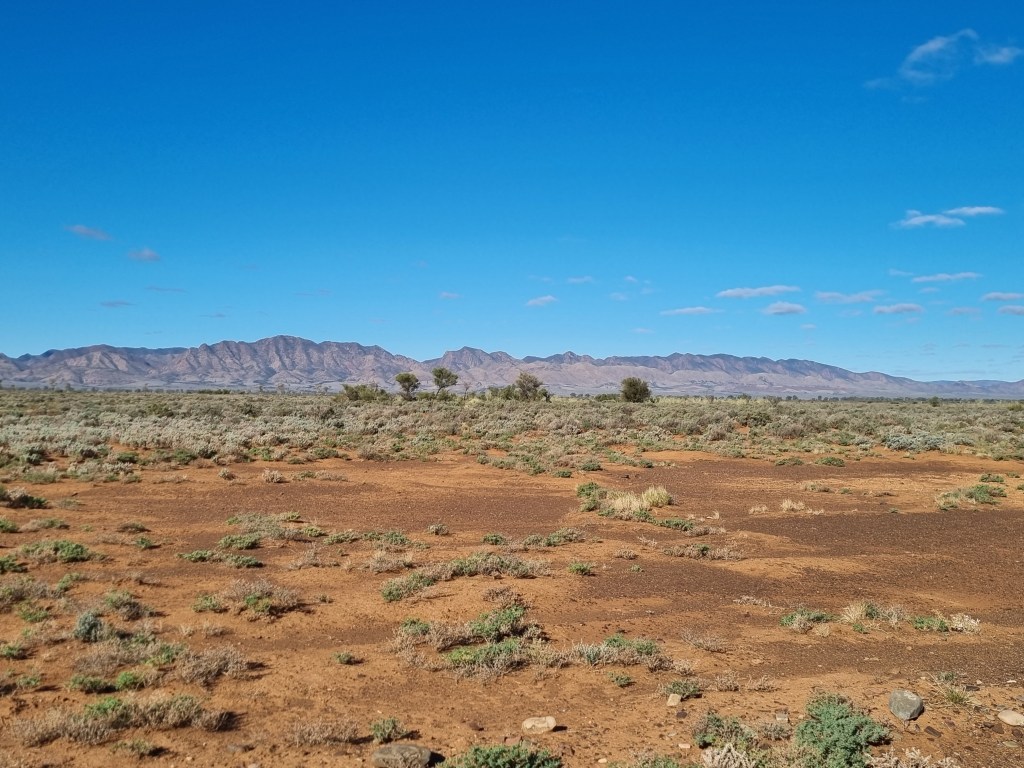
Week 1. Leaving a dreary Adelaide in early May my sister and I headed North, skirting the Flinders Ranges to arrive at Leigh Creek for the night. Lest you imagine the greenish hughes of the Mt Lofty range extends well North. I need to alert you to the fact that one quickly enters more arid zones as can be seen with this view of the Flinders from the road. This beautiful range escorted us for quite a way before we moved into the more remote areas.
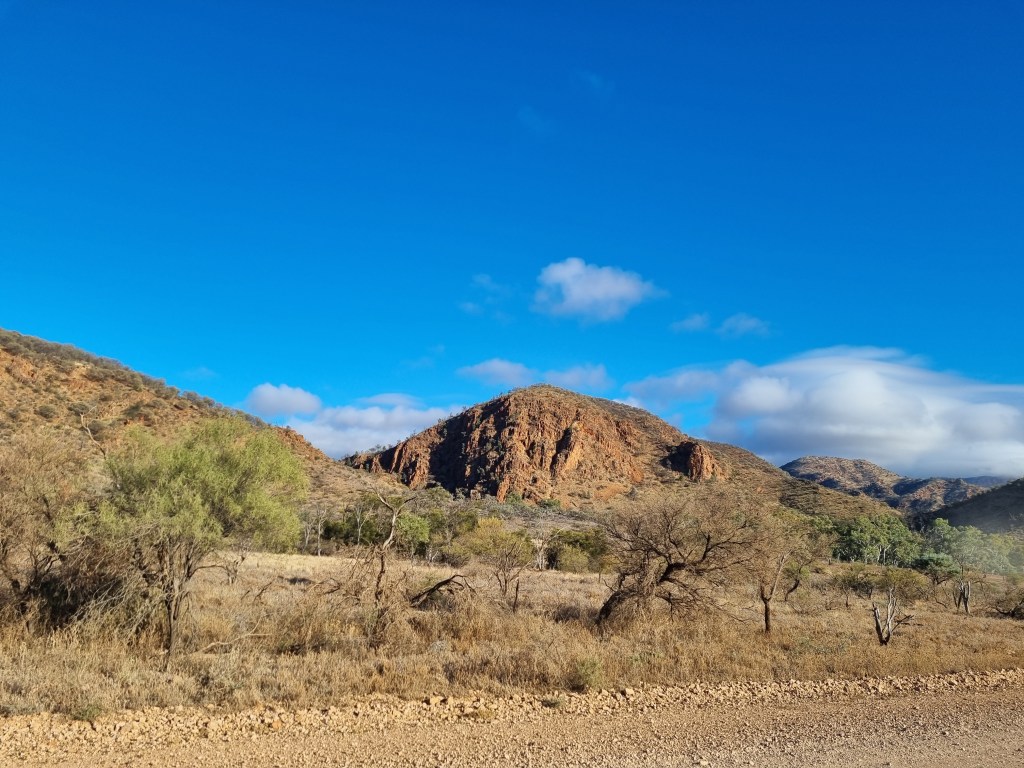

Next day it was a dawn start as we knew the Strezlecki track was ahead en route to Innamincka and the Culyamurra Waterhole, Australias largest billabong. Nipping across to the Gammon Ranges (above) towards the Mt Hopeless track and then the Strezlecki we eventually reached our goal. Sadly this was to find the waterhole out of reach because of recent rains in the headwaters of the Coopers Creek. Never-the-less the camp commandant found a great alternative and we spent a couple of relaxing nights by the river.
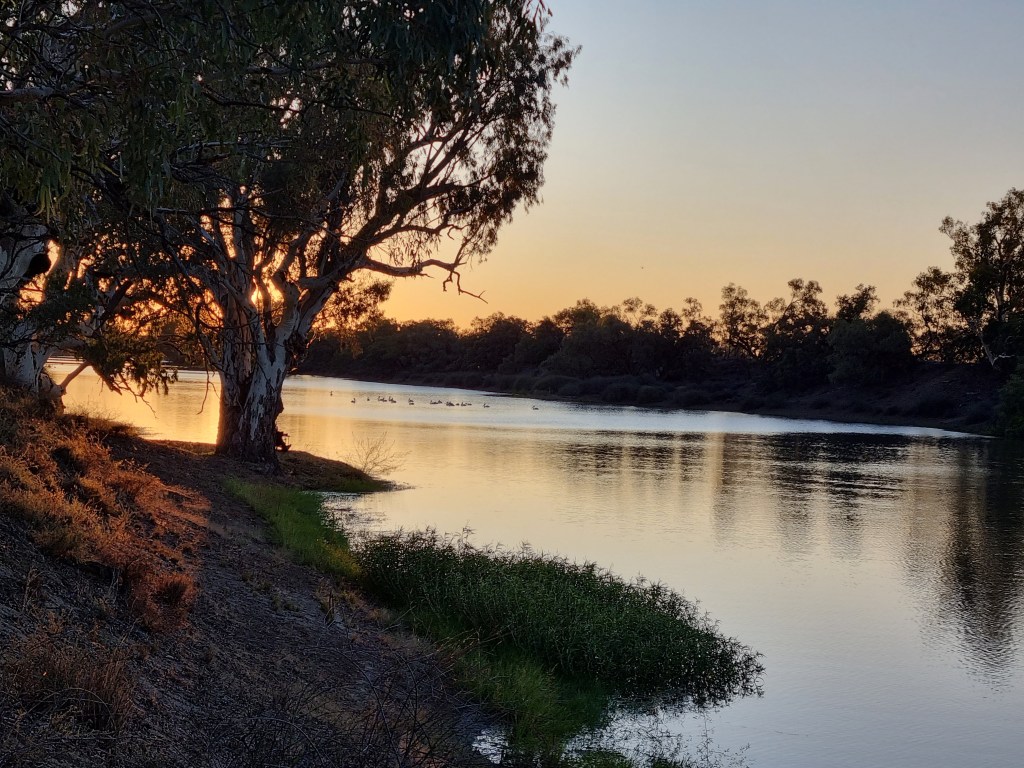
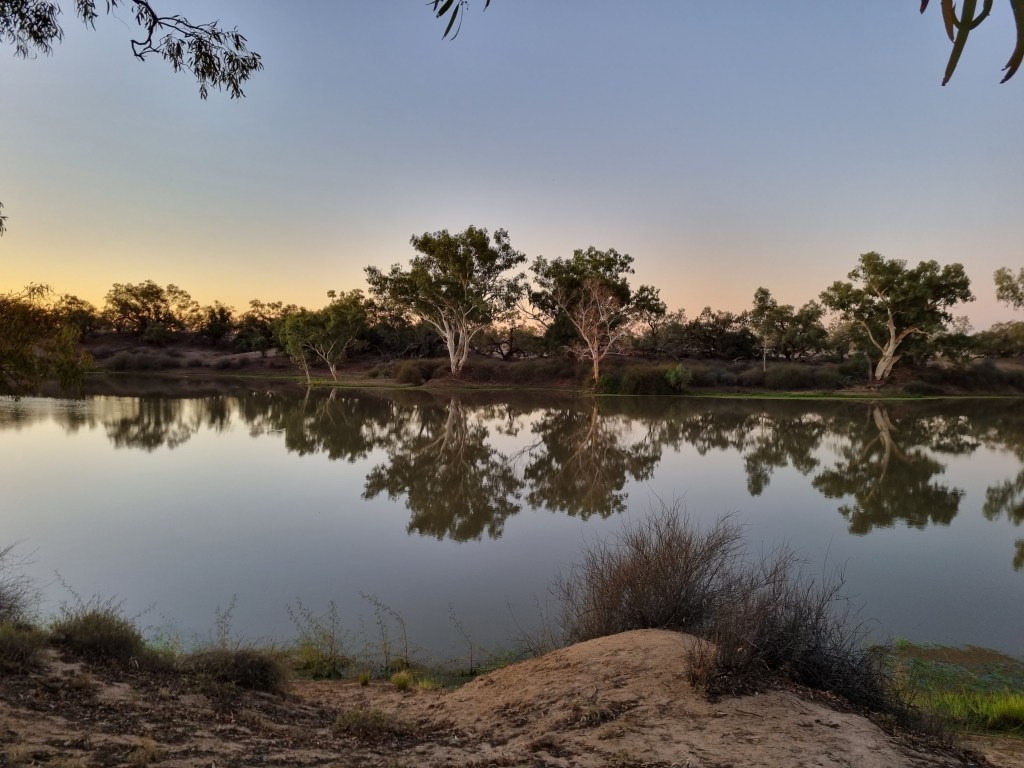
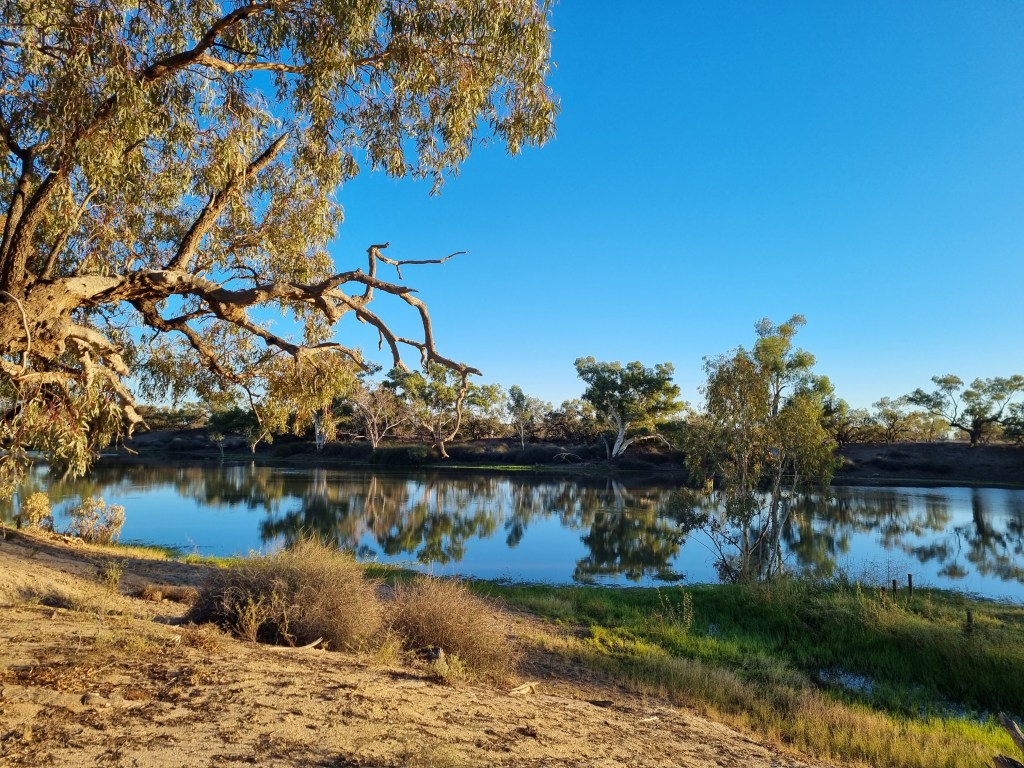
Coopers creek is a haven for birds and other creatures, including Whistling Kites, Pelicans, White Faced Herons and mobs of Little Corellas. Their dawn and dusk chorus (or should I say squarkfest) can be rather overwhelming. Here I inform you of the Bird of the Day; the lovely Mistletoebird with its stunning black, red and white plumage. The name is a giveaway as yes, its feeds on Mistletoe flowers.
Now lest you imagine the area around Innamincka is pretty because of the river I must remind you that this is parched country and with the exception of the very waters edge is truly bleak. You can be sure that even a sniff of rain would send me scurrying to safety.

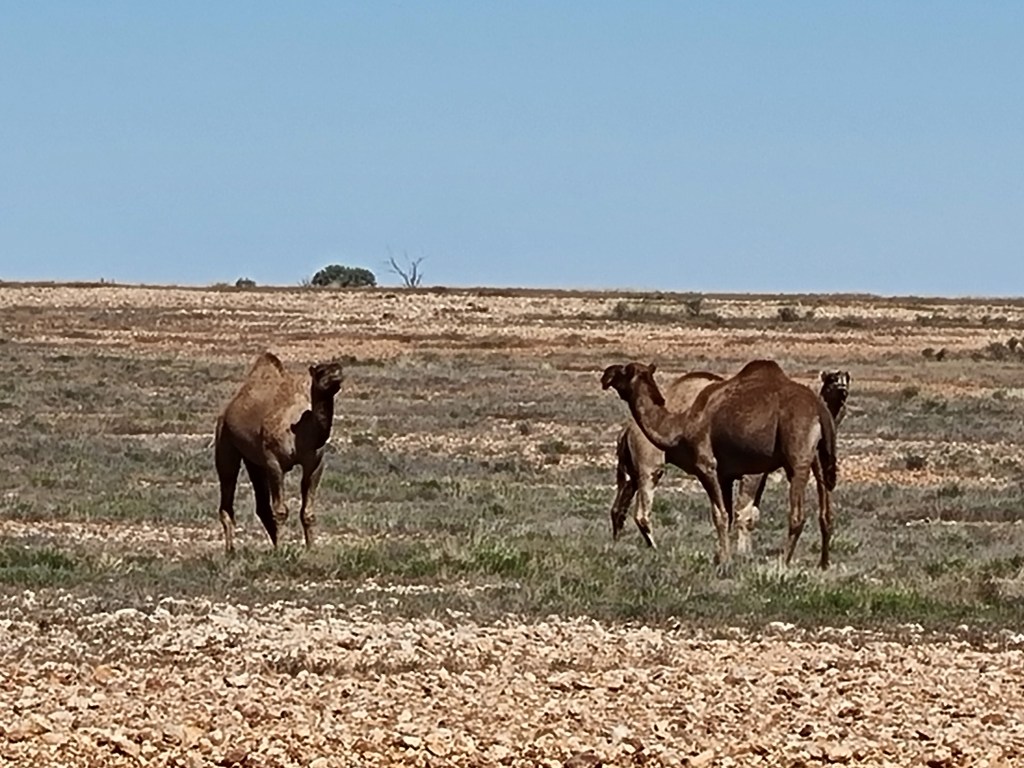
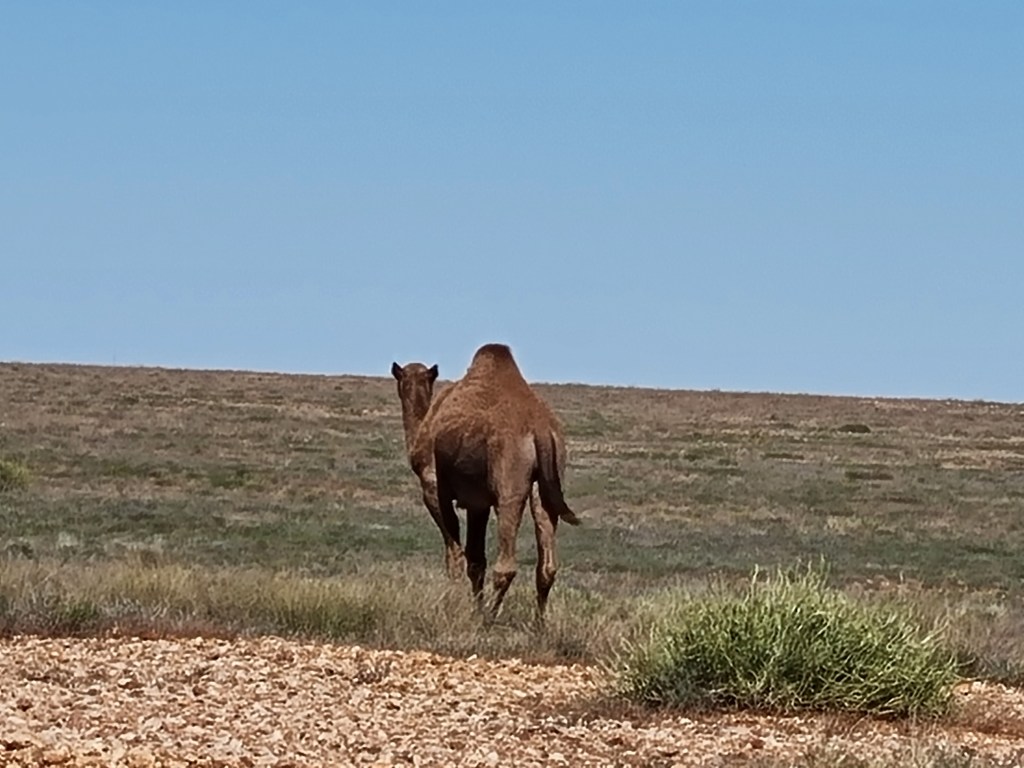
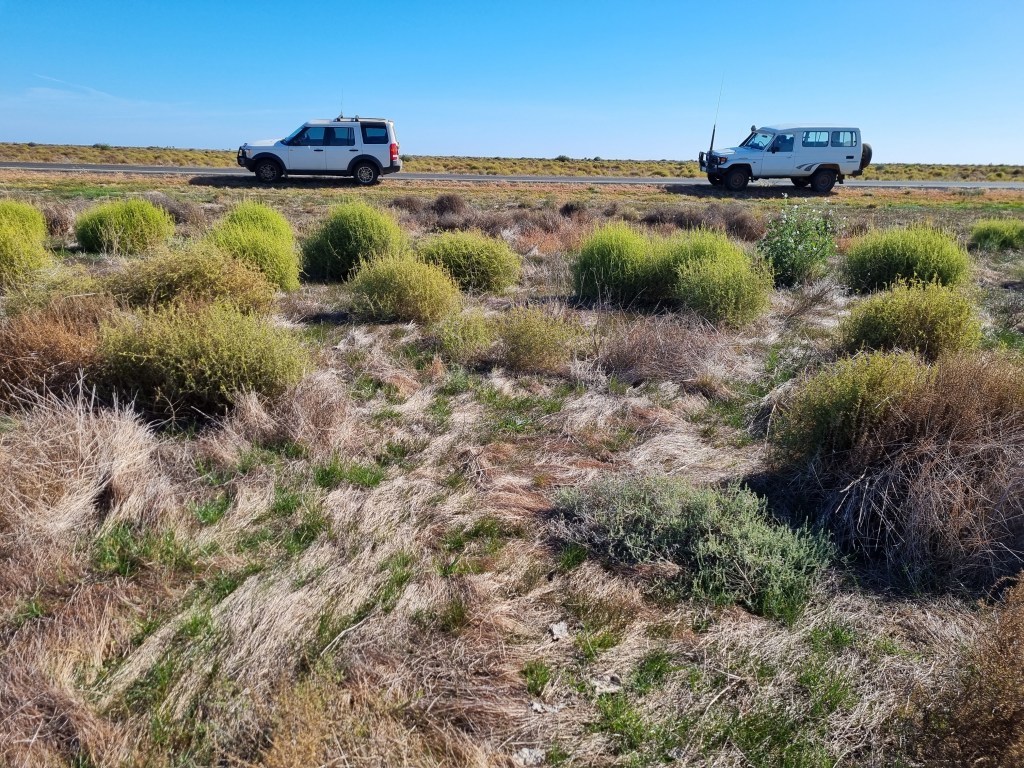
After a relaxing time we headed East to the small and pretty town of Thorgomindah, in the Bulloo region of Queensland. The country enroute remained bleak and uninspiring but we did not expect to see these blighters here. Western Australia has millions, but whats this!!! I need to do some research…
Thorgomindah is a delightful town, but a staging post really for showers, reprovisioning etc. Interestingly this town had Australia’s first hydroelectric power plant and the third in the world. Now one must ask how this could be? Its a great story. Think about our great artesian basin which is the biggest and deepest such water basin in the world.
Tomorrow we will be offgrid again. Should be fun! Your Bird of the Day is the stunning and regal White Browed Wood Swallow. They are around our camp and the river here by the dray load. This most pretty of birds is generally grey but has a dark face and pink chest and belly. A clear bold white eyebrow is its “give away”.
Occasionally when travelling in more remote areas there are times when the adrenalin is well in over supply. Planning for couple of nights in the Currawinya National Park near Hungerford we left this morning with much anticipation. The forecaste for a small amount of rain was of no consequence. But these Queensland back roads have a reputation for cloying mud.
Arriving at the park we carefully chose our nights camp well away from clay pans and anyone else. The Pardoo camp area was beaut, and best of all we had it all to ourselves. Watching the turtles resting on rock shelves in the river was a treat.


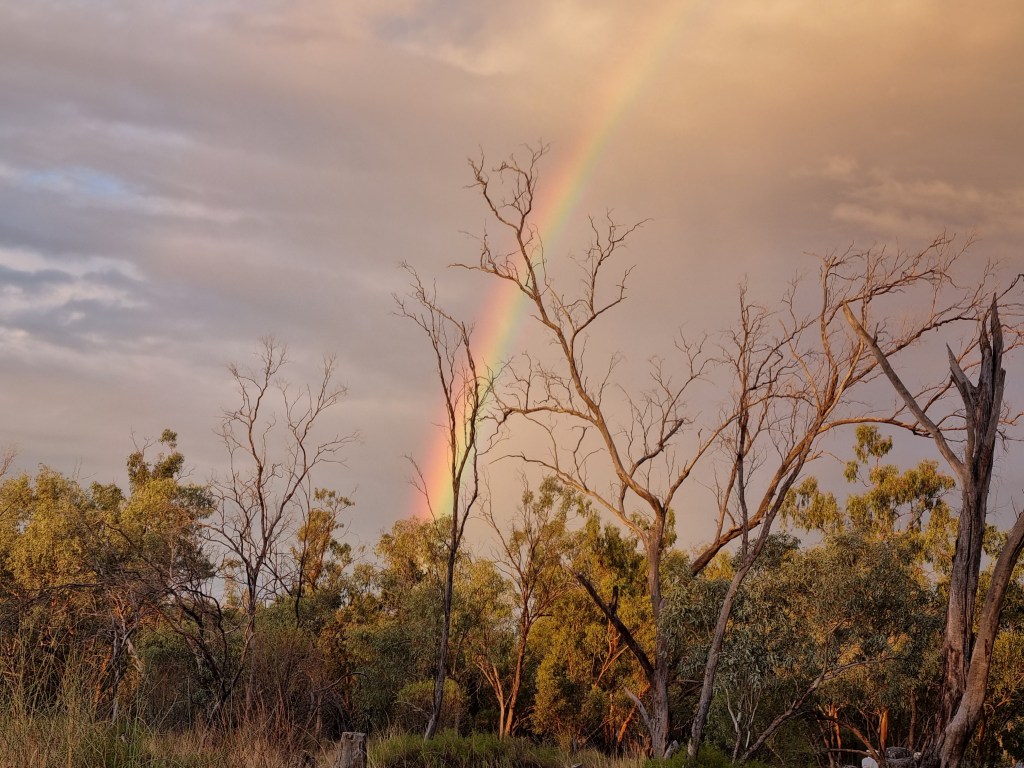
Being ever observant of the clouds we could not help but be horrified to see an intense front approaching. No hesitation… chuck the gear in the vehicles and run!!!! Recognising that we actually had to pass through the front to reach safety we drove on with nervous anticipation; but of course felt the brunt of the storm. Torrential rain and lightening heralded a very troubling change in road conditions with mud, rivers of rain on the tracks and a potential to lose control and slide into the gutters.
So with 4*4 chosen we drove on trying to keep control for some time until we passed through. It was a relief when we saw the sun peaking through the less dense clouds and a drier track signalled that we would not bog. Of course we can retrieve ourselves with snatchum straps etc….but what an awful mess!
A great outcome albeit our cars would surely tell everyone what we had been up to. Looking back at the receeding storm front we were pleased to be back on good roads and rejoiced that we would not be camping in mud for a few days. True we were very very muddy for our troubles…but thank God!
As we passed through the storm dozens of Major Mitchell Cockatoos flew overhead. I have never seen such a congregation of these birds together, but they did look skittish. Perhaps they were affected by the weather event. These beautiful cockatoos are white with a pink belly and face. Their head is white and their red crest is a real feature. This was a treat and I must add this as the Bird of the Day. Major Mitchell’s are endangered.
After a free camp night at Eulo we were delighted the next day to pass through vast grasslands and forested areas. At last green green green and vegetation that looks vibrant and not just into stugglesville. Passing through rain bands yet again we were super vigilant as Roos and Emus have a habit of gravitating to bitumen for a drink after rain. Many did and I have seldom seen so many Emus around; unsurprisingly I suppose as the grasslands must be rich pickings for them.
Week 2. Arriving at the delightful Charleville we took the opportunity to gain information about the secret US airforce base here during WW2. This was a really huge place with 3 runways and thousands of personnel. Funnily enough the whole town was asked to swear and oath of secrecy at the time. The size of the place can be demonstrated by the fact that during the Coral sea battle 250 B17 bombers were marshalled here.
We took the opportunity also to gain information about the mighty work of the “Bilby Brothers” who with the support of mum and dad environmentalists down South fenced 29 square kms of Currawinya (of “get out of dodge” fame) to reintroduce these beautiful creatures back to the wild. Sadly flooding damaged some of the fences in the early days and 60 cats feasted before being terminated and the fences remodelled. What with a looped down sections at the top any cats clever enough to go behind the electric wires can only but fall into them in the end….neat!
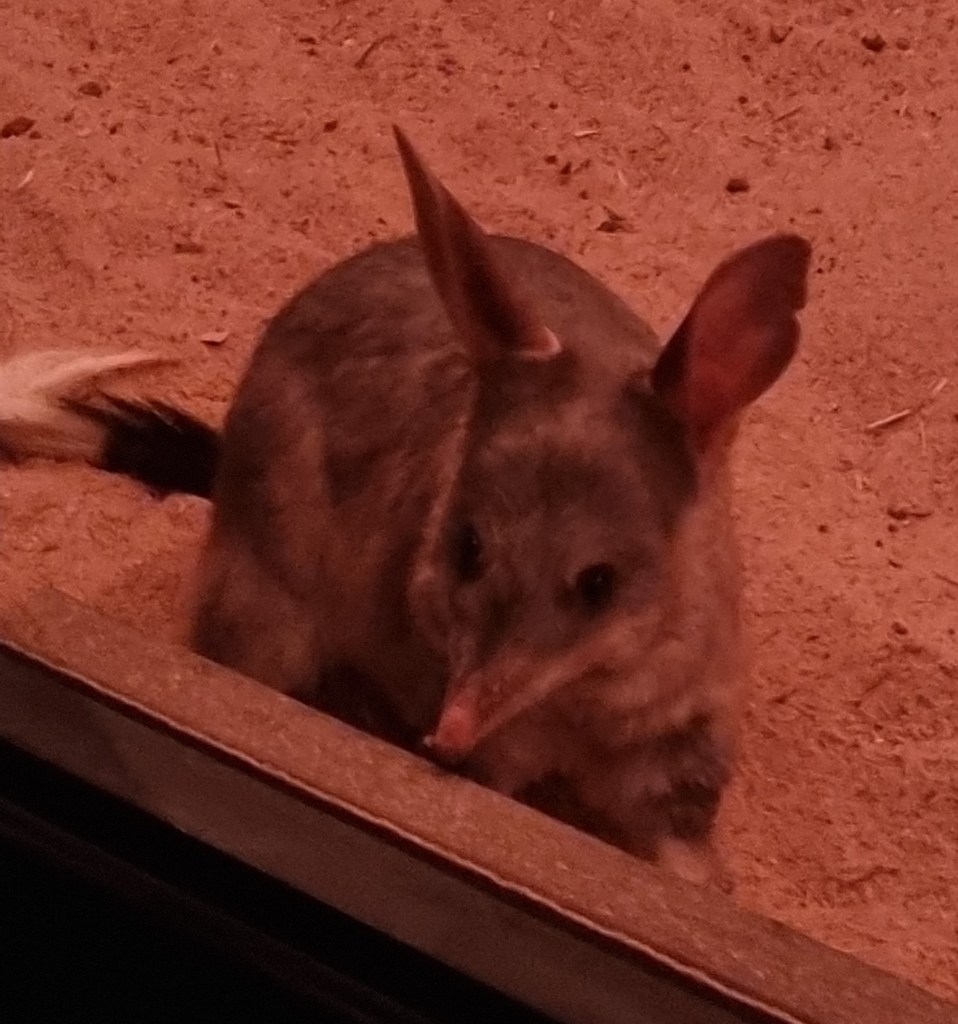
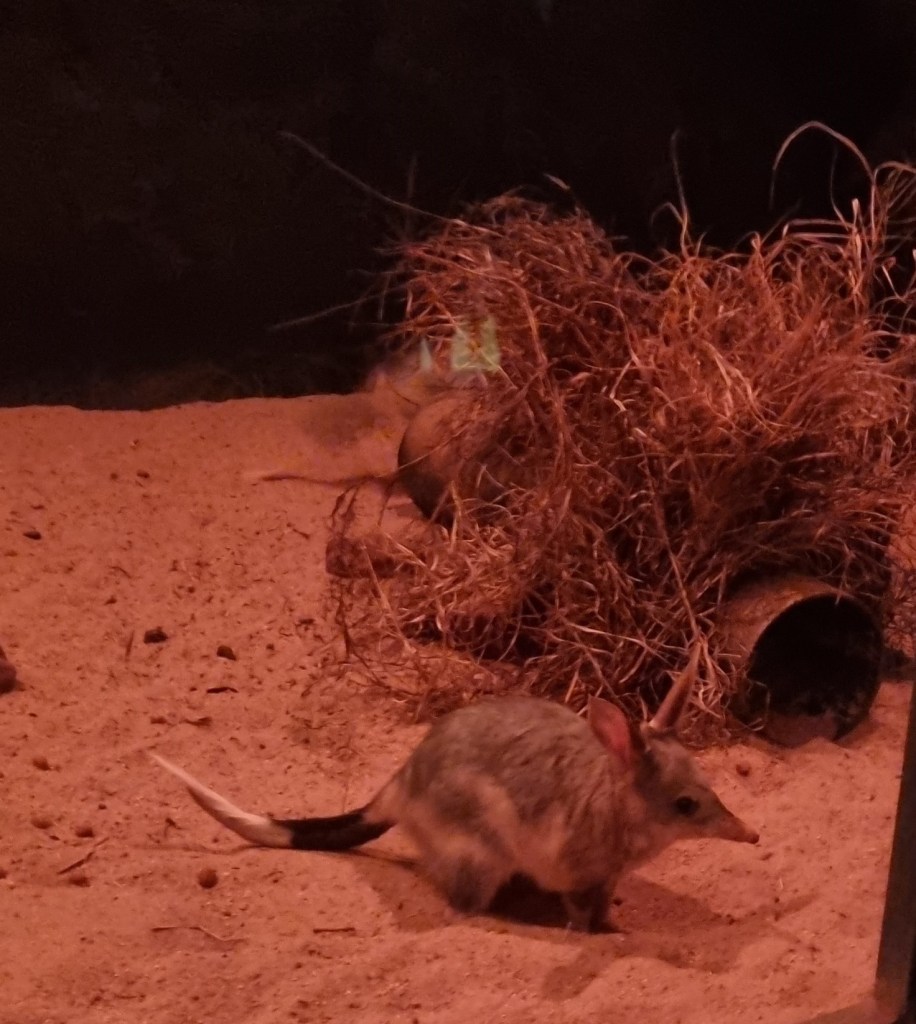
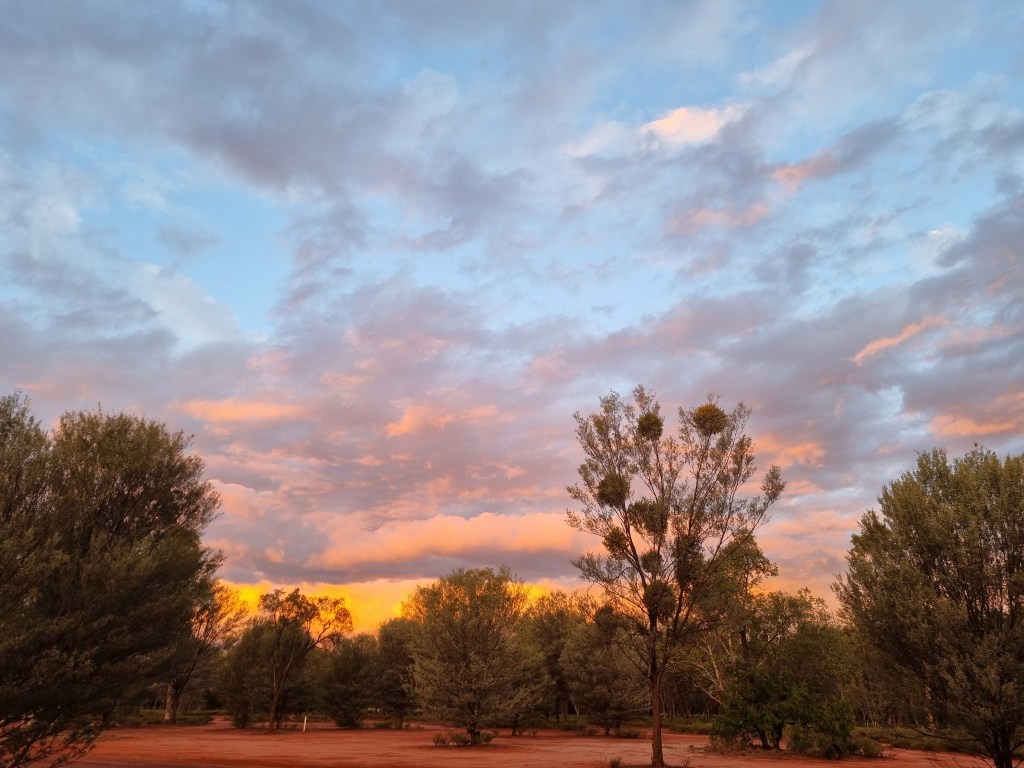
My Adelaide advisor has told us that a huge rain event is underway around us…darn! The sunset looks somewhat ominous, but we shall see what happens. Tomorrow its onto Canarvon National Park. Time to get the walking boots on…
Arriving at Canarvon has been an eye opener because of the lushness of the vegetation. We figure that if the walking trails are like this it will be truly beautiful…and we have not been disappointed today.
From the get go the subtropical vegetation has been a bomb of greenness and lush vegetation. Clearly this is native vegetation that has not been sawn or damaged in any way.
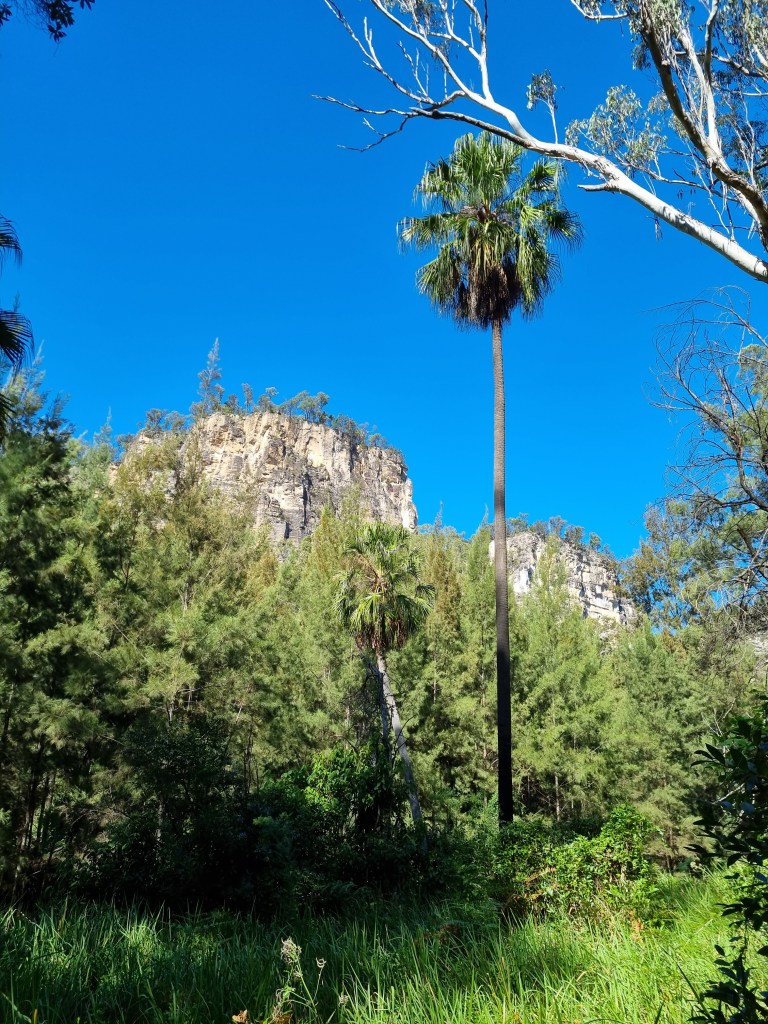
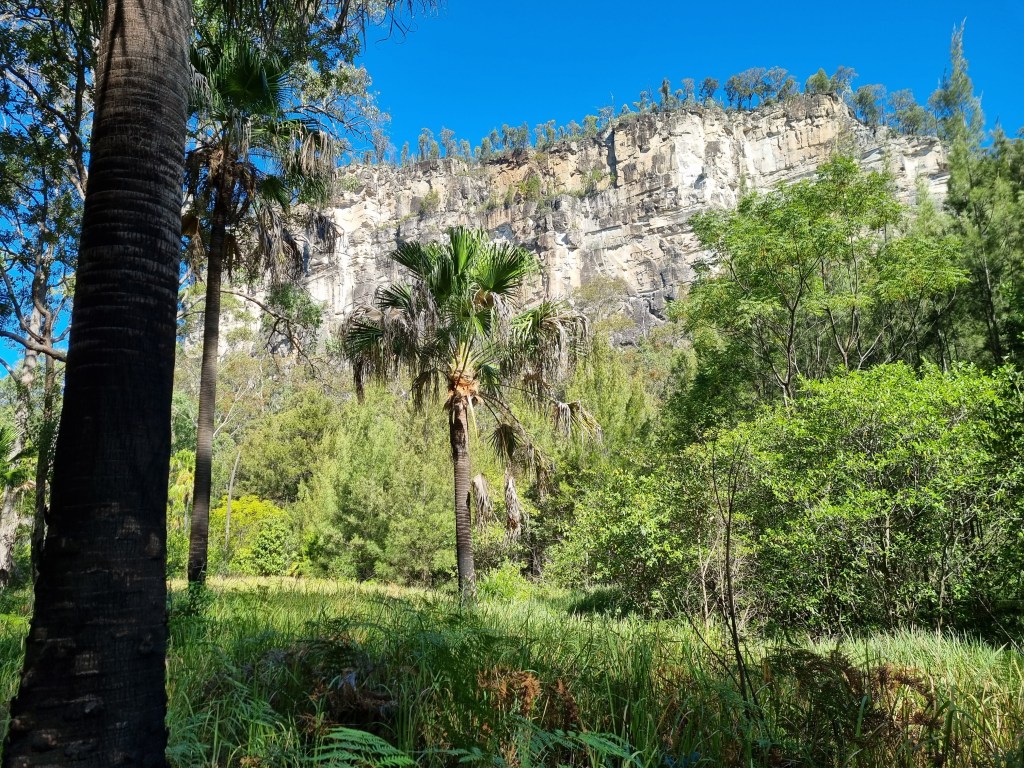
We headed to the Ampitheatre, but needed to cross several stoney creeks. Thank God for walking sticks as this exercise could have been a wet one. As it was one person ended up with wet feet… no comment? On arrival at the ampitheatre it became obvious that we would need to scale a ladder to a chasm…kinky!

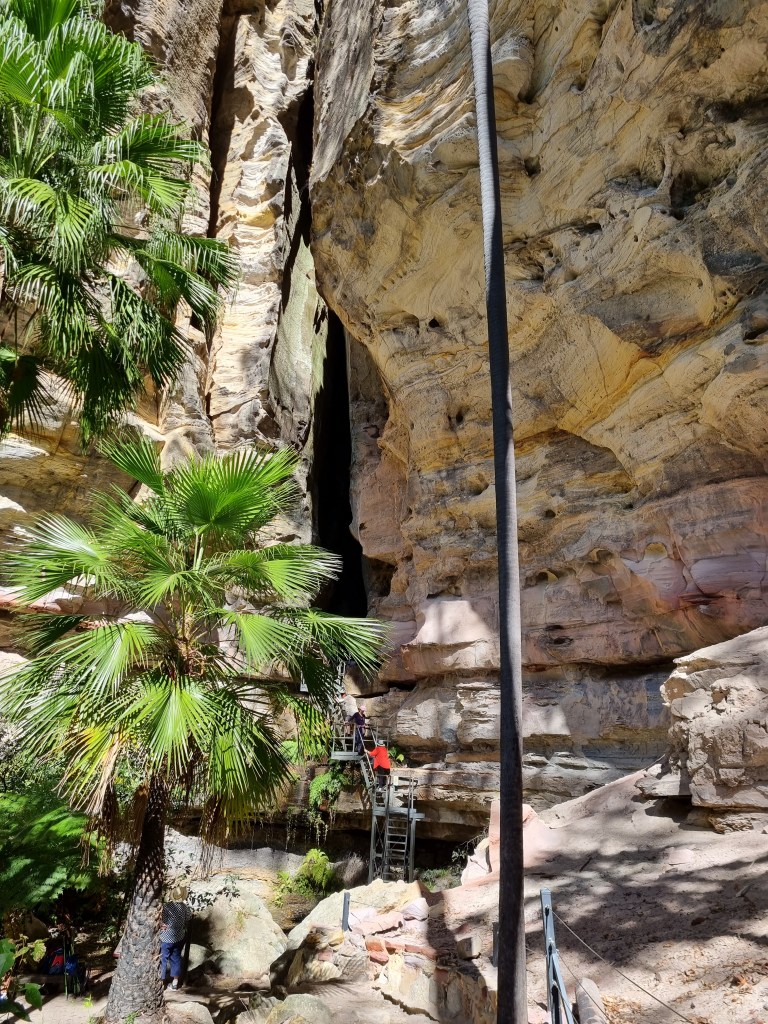
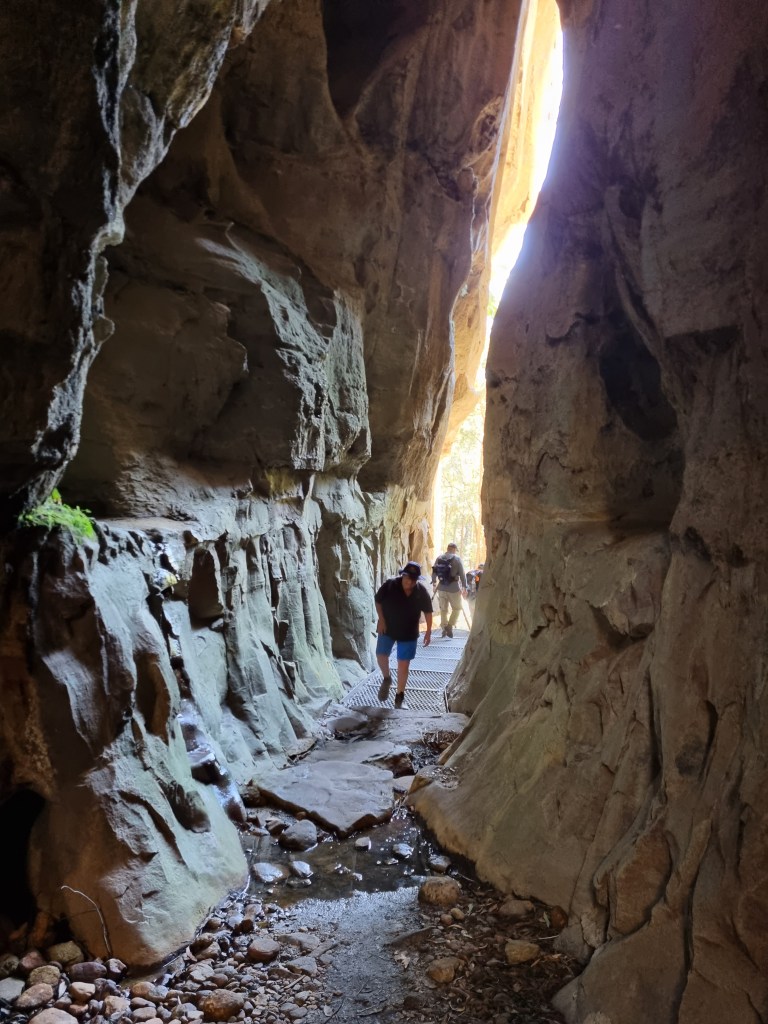
This in turn led into a cathedral of rock.
Then back on the track through the beautiful landscape to our car.
In a way this area reminded me of the phantom cave (our name) friends, and I discovered in the Bungle Bungles WA so many years ago. The park had just opened and, apart from the Ranger we were the only ones there. One day he excitedly came over to us with a mud map of a special area he had discovered. The next day we followed his map and were amazed with what we saw…. As a friend and I are heading back to this park in July I wonder if that wonderful place will be still hidden?

A new frigid morning dawns and I have instructed the camp commandant to do some spring cleaning whilst I head off to walk to the Boolimba Bluff; reputedly a walk that requires some degree of fitness and rock hopping ability. I think that means elevation, and probably rules this old gal out…but I think I will give it a go.

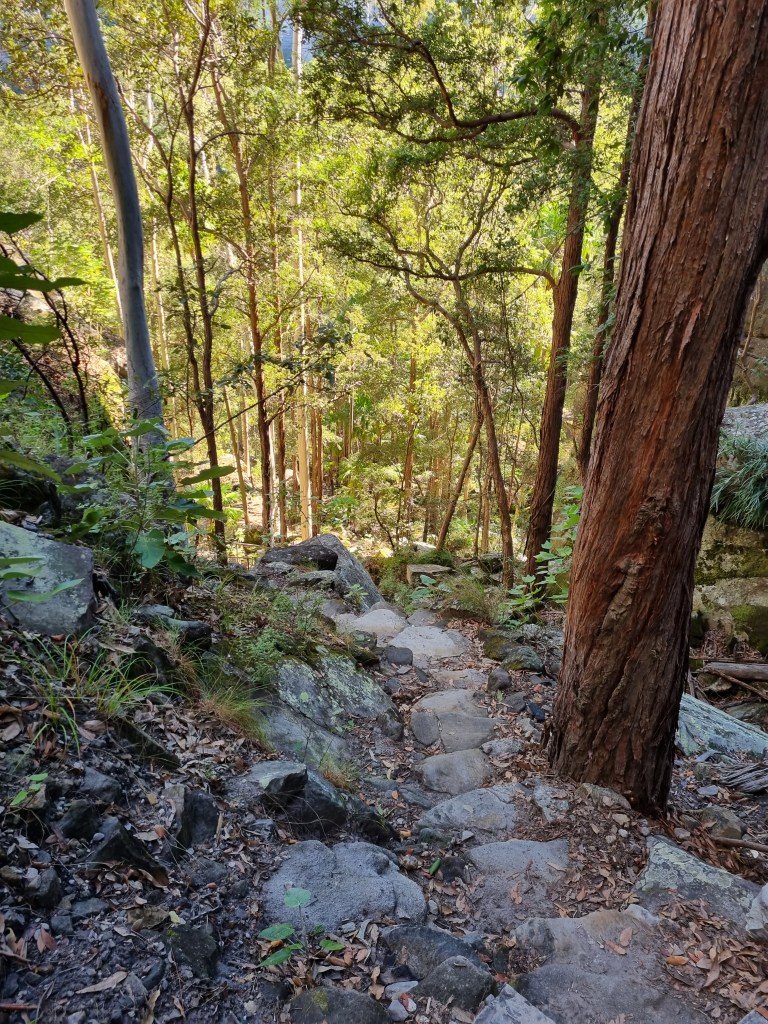
After trudging up the rocks it was an absolute delight to get to the top and to see the cliffs around the Canarvon Creek…oh my!!

Walking further on its the whole mountain range in view…a stunner.

After some time I sense the walking poles need to be elevated for the return trip. En route the cliffs on the way down are lit by sunlight and look very pictureseque. There are a few moments of sympathy for those poor souls puffing their way up the track…but in truth that doesn’t last long.

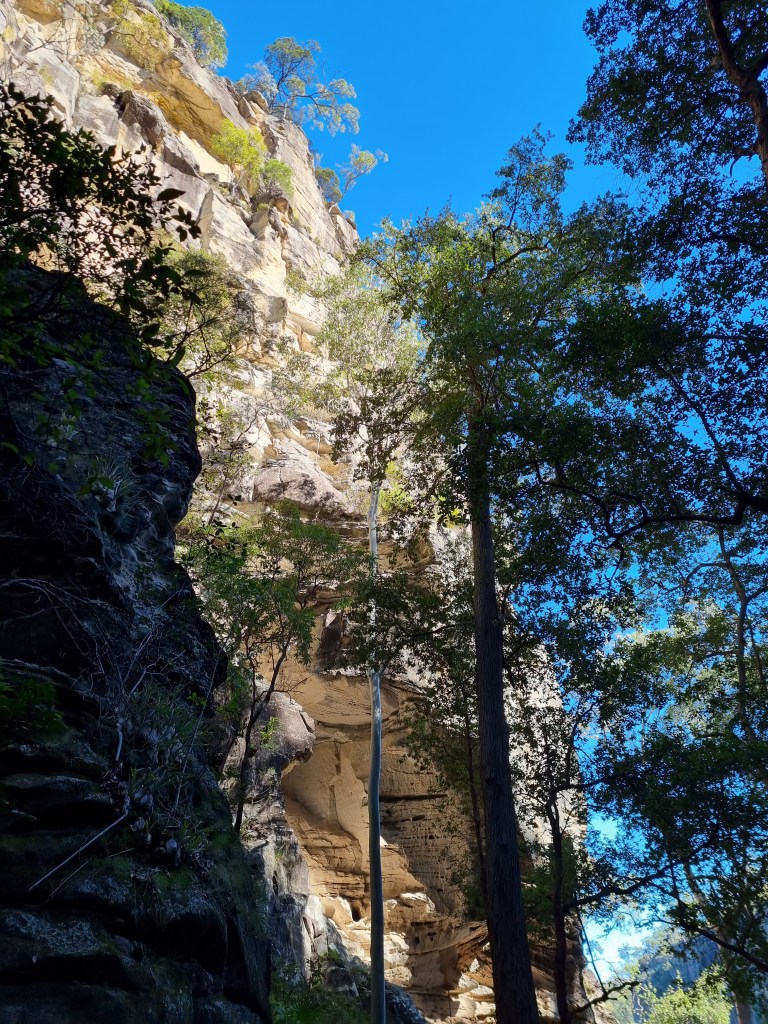
Getting back to the commandant for lunch I am disappointed to be offered stale bread and cheese, but perhaps thats just pay back?
Tomorrow its onto Roma and more flat vistas. Canarvon Gorge National Park must be seen as a real winner! But first the Bird of the Day which is actually the Pied Currawong, not because of its stunning plumage (somewhat ordinary) but voice. Each morning we are awoken to its most melodious morning call. Plaintiff and rich.
Heading South along the Great Inland Way one moves through what appears to be a cotton growing zone around St George. White balls litter the road verges and bales of it are plentiful in the paddocks. Cattle graze happily on the rich grasses. I have to say we were greatly saddened to see just so many kilometres of rich and diverse tree and bush zones that have been bulldozed, presumably for cotton or cattle…how awful!
Then onto the Warrumbungle National Park, a mecca for walking and camping. We arrive at late afternoon and quickly get to see what its all about.

The next day is cold and cloudy. A change is clearly coming through. Nevertheless we manage some walks around the Whitegum lookout and for me the Fans Horizon. The former gives very pretty views or the surrounding mountain range, but the latter is the stunner as the views are truly expansive…..may I never ever see steps again as the whole way up to the Fans Horizon was via thousands of the jolly things. Give me rocks any day!
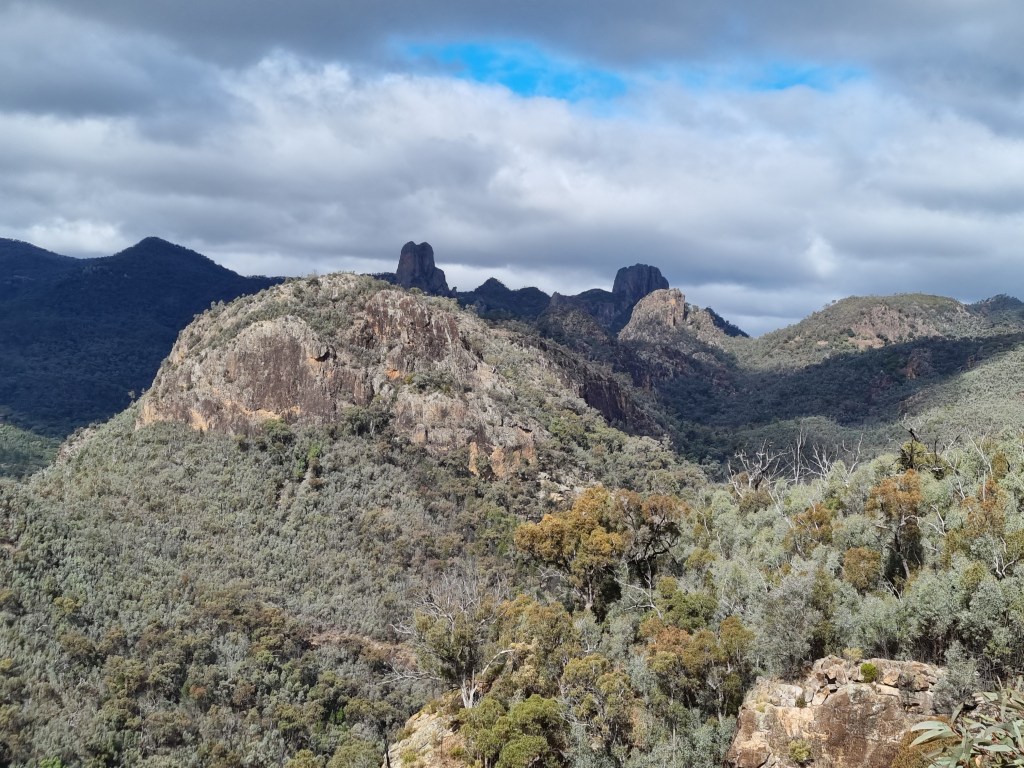
The Warrumbungles was almost completely burnt in 2013 and has really made a remarkable recovery. Interestingly the bird population was less than expected given the rich diversity of vegetation. It will probably be some time before things really return to normal. To be sure the Pied Currawongs raided camp for leftovers at dawn, to be closely followed by the Apostle Birds. The latter are actually quite cute medium sized greyish birds and behave very much like our Babblers. They roam around in packs and chattering amongst themselves. Hilarious!
Its a below zero night as the storm system has passed and we needed a pretty good fire to keep warm later in the day. Ice was everywhere this morning and fingers suffered as we dismounted camp. My sister is keen to head to the Pilliga Forest for a couple of nights but I am not so keen (but I won’t tell her that)…Isn’t that the place of UFOs and Min Min lights and all sorts of other stories?
Week 3. Reprovisioning at Coonabarabran we will head that way this afternoon…if you don’t hear from us again-
Well we eventually make it to the right place after driving dusty roads for a while. Happily we have rather powerful UHF radios in each car so the lead vehicle which will always be way ahead because of the dust can be clear about any nasty road conditions to expect and also which tracks to ignore and which ones should be turned onto. Being clear about these directions ensures that if we get lost at least both vehicles are together. To be clear, we would never really be other than `temporarily misplaced’ because we have detailed maps & Hema (GPS) on our phones.
Getting to a rather nice camp spot at the Sculptures in the Scrub area and we are surprised to see it deserted. Now I know some caravaners have been turned off by the road conditions but thats strange?? So we have a beaut night beside a beefed up fire as the chill quickly descended and then to bed.
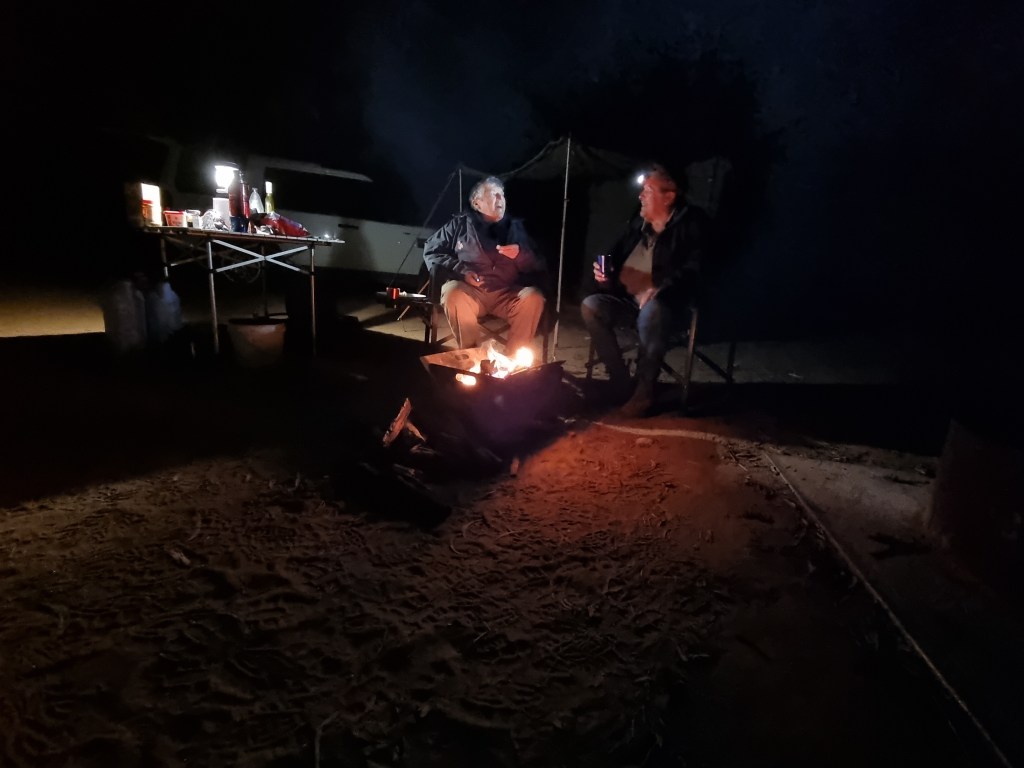
Now I confess that although my sister (alias the commandant) wanted to stay two nights here by 0630hrs the next morning I was ready to demount our icey camp and leave. The place did not feel OK and I wanted out. This was not helped by my sisters insistence of spooky events in this area. Before we left we did quickly check out the indigenous inspired art.
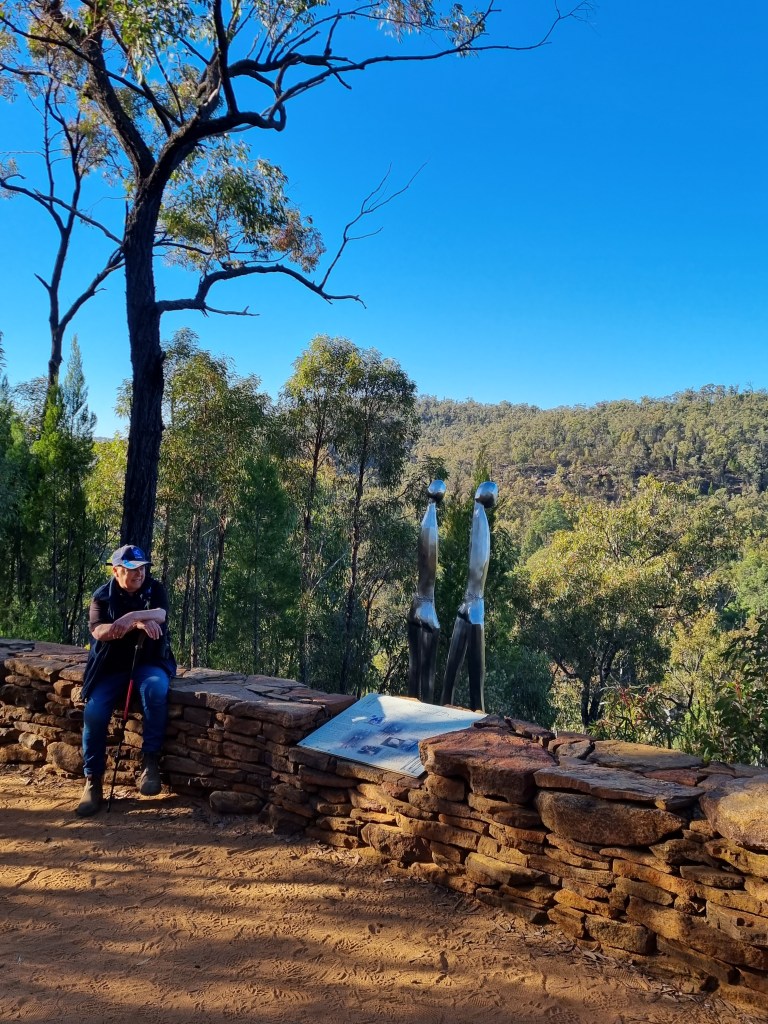
Pilliga Forest is huge really and is dominated by White and Black Cypress. Some of this is cut down commercially but large tracts are State Forests & National Parks. There are some 2500 kilometres of logging and other tracks throughout the area and, as we found its pretty easy to stray as signage is not the best.
Funnily enough when we went to the Pilliga Discovery Centre the staff were careful to keep well clear of the strange tales related to this area. But they did at least acknowledge that they existed.
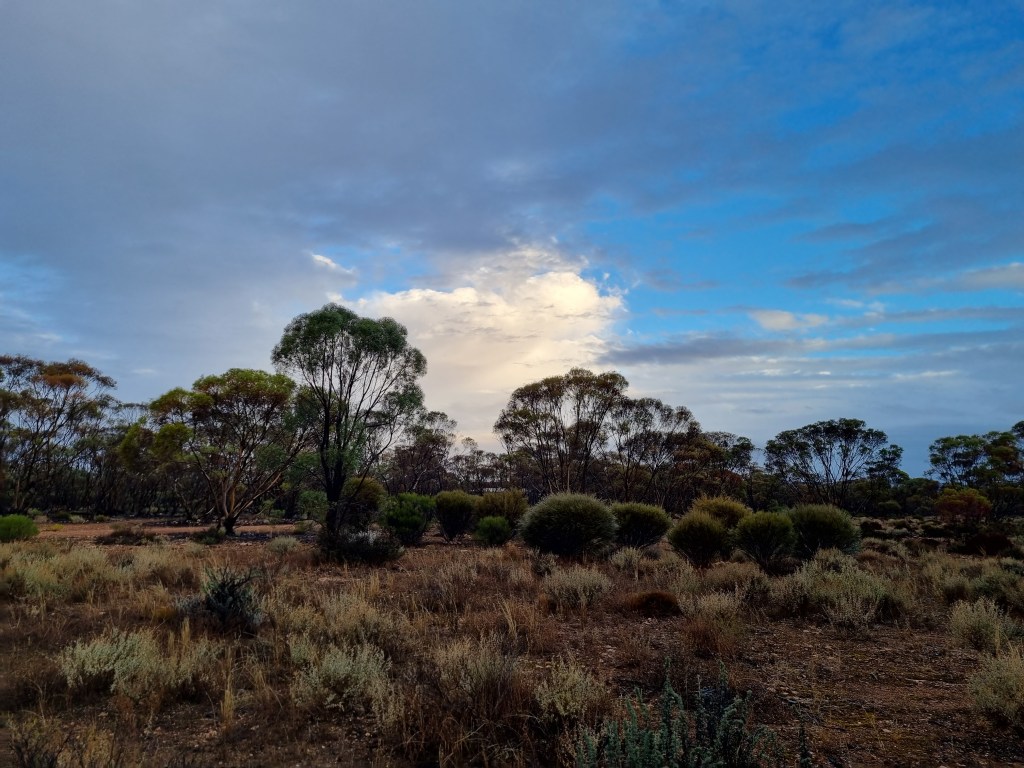
Passing through Coonabarabran again its time to head South and East towards South Australia. So onto Parkes and across the Hay Plains to Balranald a place we have lobbed onto many times before. The Hay Plains are quite interesting as they are flat flat flat with lots of grasses and wide vistas. Now we are at Balranald ready for the quick sprint to Mildura and our Riverland property for the big clean up.

I expect you may like to know my Bird of the Day. It’s actually a toss-up between the Grey Crowned Babblers around our Pilliga camp and the Black Faced Cuckoo Shrike. The Babblers were quite different in behaviour to our own in SA as they were quieter and gently preened and smooched in pairs as dusk fell. We looked around for their overnight nests and could not find them. This deserves a story…
When travelling on the Old Andado Track near the Simpson Desert once we were surprised to see huge pendulous nests in the trees around us. When dusk fell groups of Babblers dived one after the other into these nests to then re emerged next morning, again one by one. I could only imagine they were sitting one of top of the other…
The Black Faced Cuckoo Shrike is one of my favourites as it’s a stately grey bird with this striking black face (like a mask). It has a beautiful call and glides around the trees like a seal. To me these birds are like gentry as they have status written all over them.
Should you wonder why you are being given these birds of the day you must have already guessed my friends and I have a long history of bird watching. Binoculars are always within reach and few birds pass by without identification, by sight, call or behaviour.
But it’s time to head home now after this beaut trip of several thousand kilometres and vastly different ecosystems. From Balranald its onto Mildura, Loxton and to our property in the Riverland. At Mildura we see some very grey clouds on the horizon, but from Loxton on they roll in to greet us. Weather conditions become challenging as we really wanted to do the big clean up this afternoon…Tricky! Home tomorrow so some things will have to wait.
States visited SA, Qld, NSW, Vic. Distance 5,500 Kms.
Should you be interested the next outback trip this year will be in July when a friend and I plan a trip through Central Australia, North across the Buchannan Highway to Western Australia and onto the Bungle Bungle (Purnululu) National Park. What fun!
 Tramping and Camping