Week 1
Well, we are away at last and heading North to the Flinders Ranges and then Central Australia. After some gloomy weeks in Adelaide, it’s a joy to be bathed in sunshine, albeit I suspect this joy may be short lived. Storms are approaching.
Setting up camp south of Pt Augusta at Spear creek, we are gifted a beautiful sunset and feel hopeful for the next day. After some sustenance we set off to walk through scenic gorges which are typical of the Flinders generally. Eagerly, we look forward another walk tomorrow.
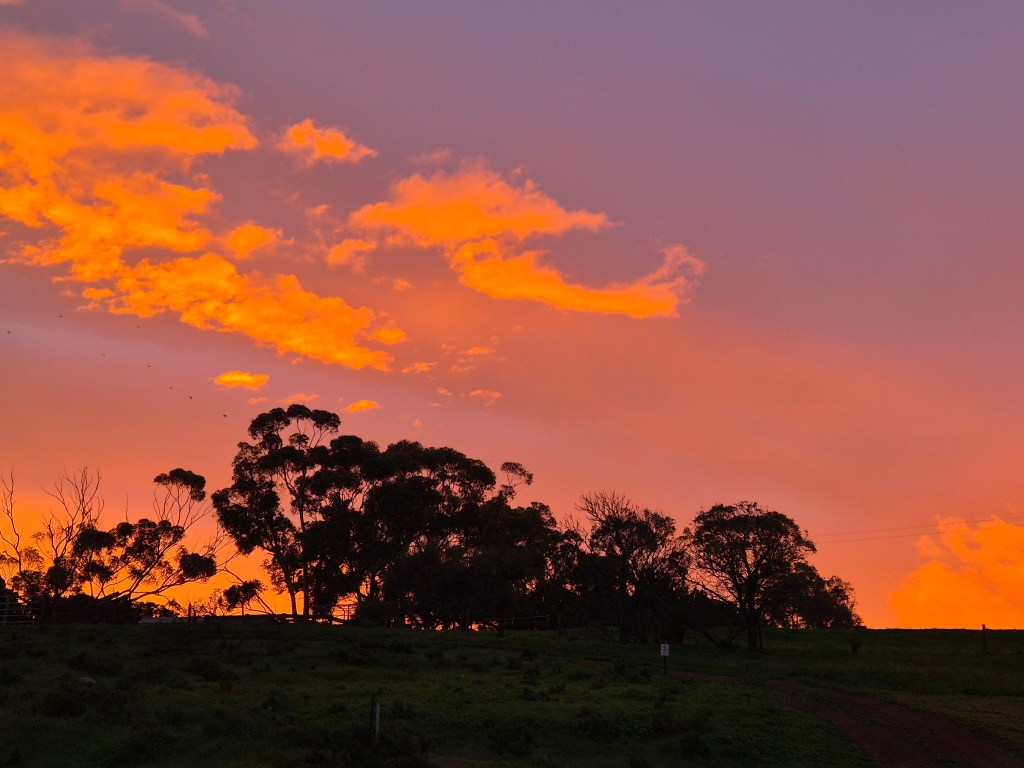
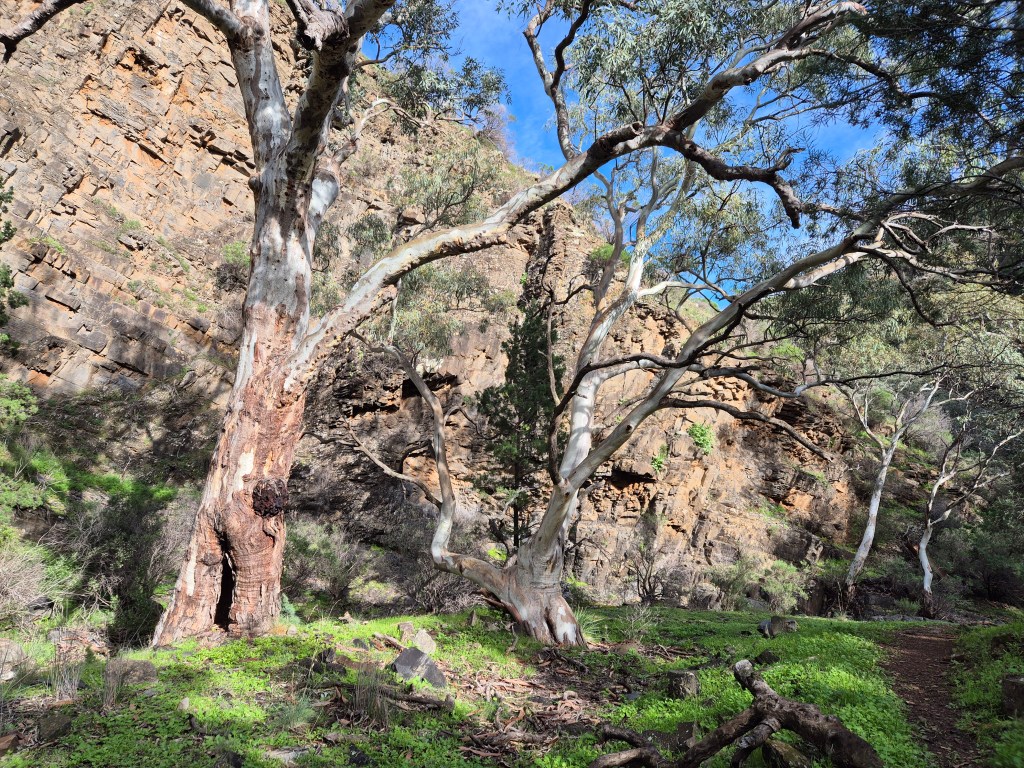
However, planning can be an illusion as we find ourselves hunkered down overnight amidst lightning, thunder, teeming rain and strong winds. Thank God for our sturdy tent. The next morning continues to be rather testing weather wise, so we decide to head to Port Augusta for the day out in town.
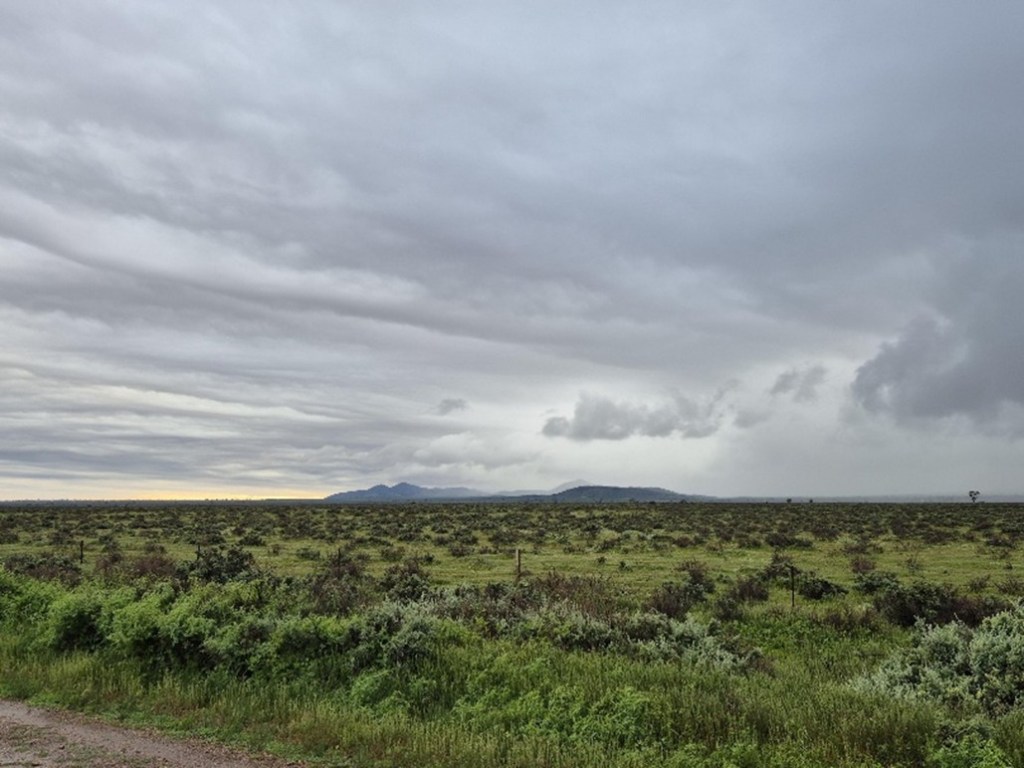
Enroute we cannot help but admire the beautiful clouds on the Southern Flinders ranges. The green landscape is a stark contrast to the distant past when dry conditions prevailed.
Being pragmatists, we realise that we should limit our time in the Flinders Ranges simply because of the weather and determine to head north post haste. A night at Glendambo, then at Marla puts us within striking distance of Yulara and one of our goals for a more detailed scoping of Kata Tjuta. In truth Uluru and Kata Tjuta are an impressive duo, but the latter has always been a favourite.
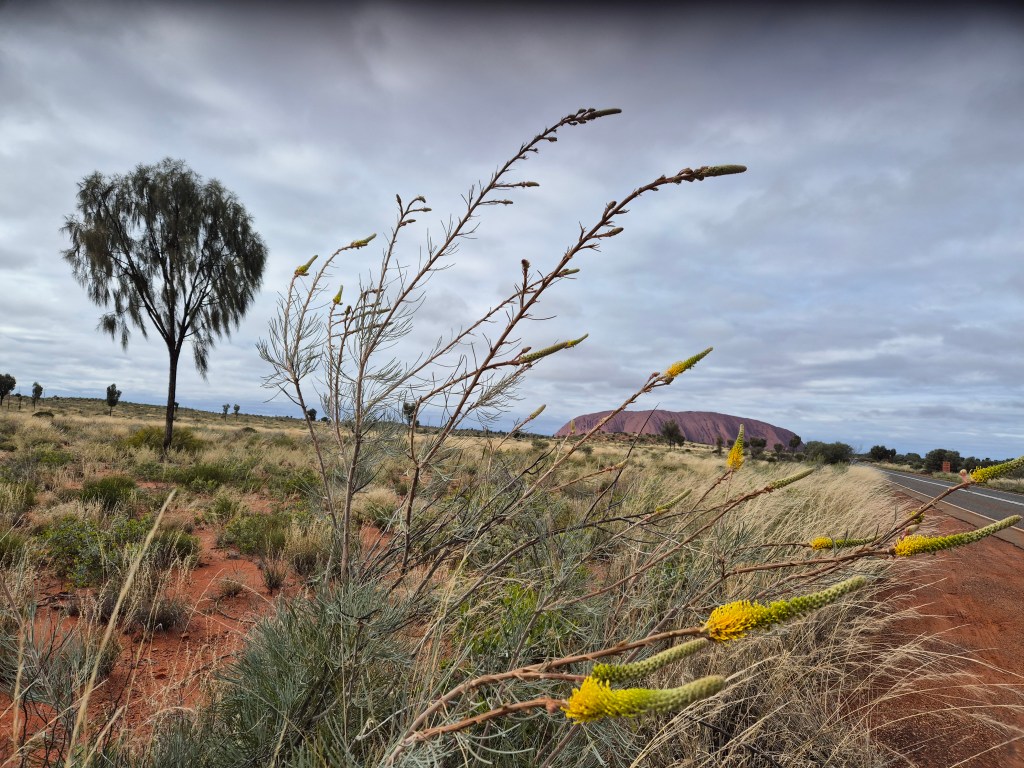
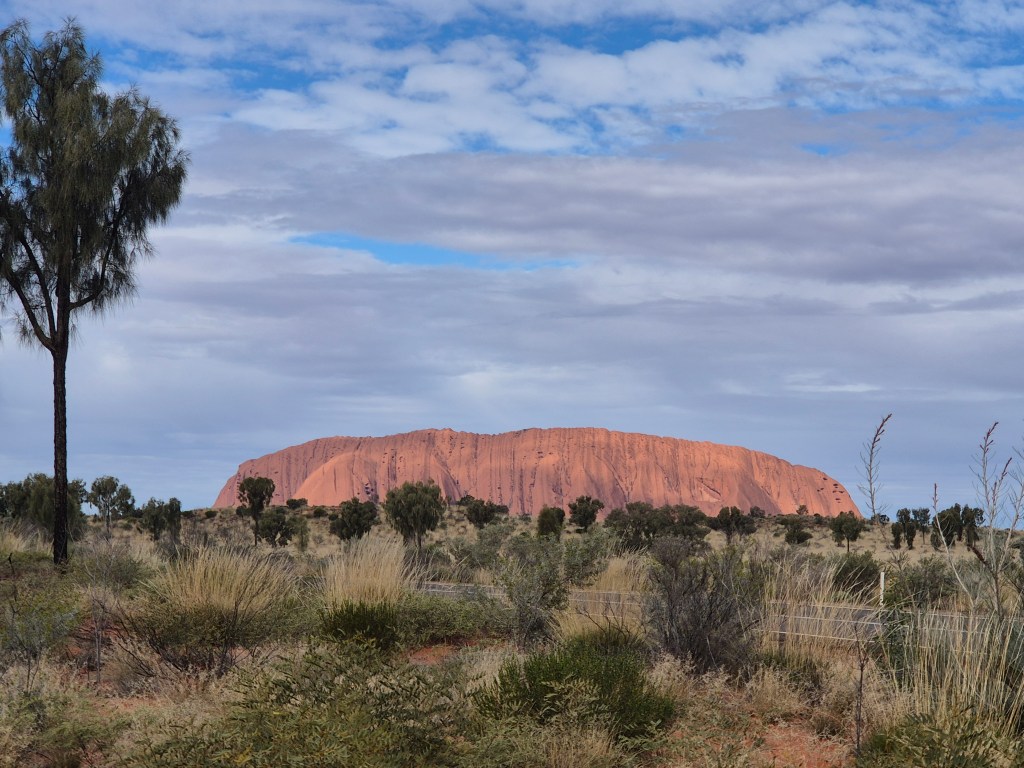
Uluru is welcoming as we head into camp but I am keen to head to Kata Tjuta to observe the sunrise or sunsets over the domes, and to wander through them more fully than I have in the past. Having said that our old friend Uluru is always pleasant to approach.
Close up, both Uluru and Kata Tjuta are massive sandstones. From experience I know, for example, that the walk around Uluru (well worth doing) is about 10kms.
Week 2
The next day dawns cloudy but with some bouts of sunshine to raise the spirits. So off to Uluru for our initial wander around. The afternoon is for the sunset at Kata Tjuta, although the weather Gods may have something to say about that.
From a distance Kata Tjuta is pretty impressive. Time to get closer.
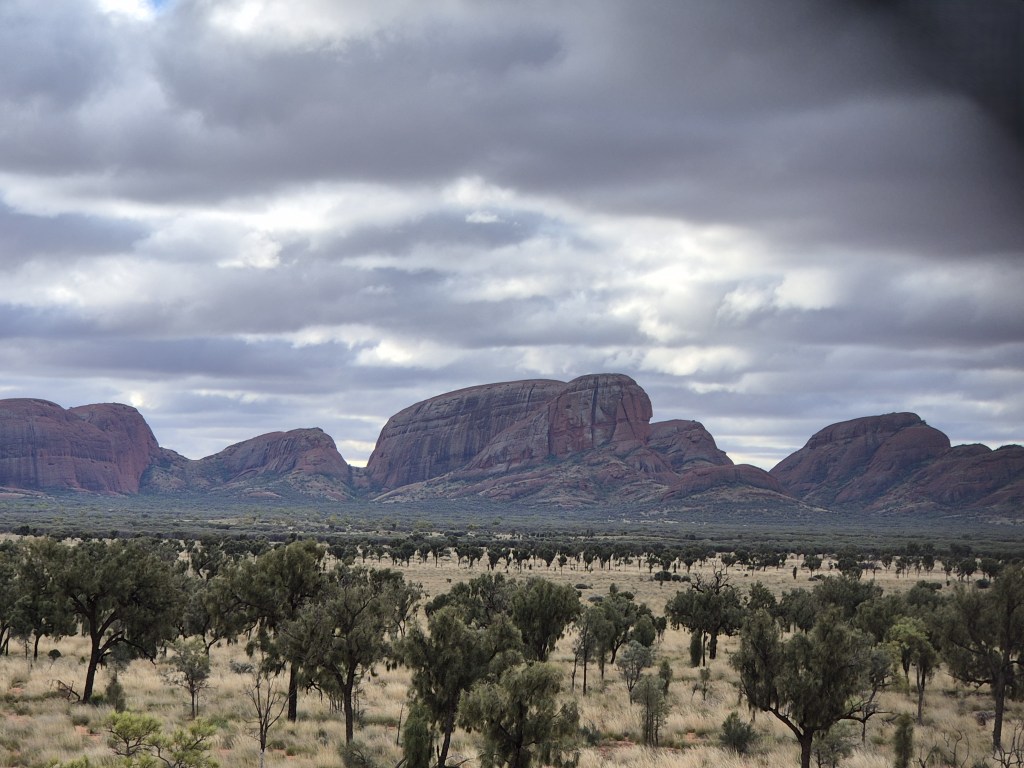
Sadly, the clouds badgering the western horizon are anything but friendly so no bright orange domes at sunset. Still, I thought the clouds over the horizon facing the domes on that side were terrific, so I am happy to wait in this jolly bitterly cold breeze and enjoy. Perhaps we will head out on our last day here to try again?
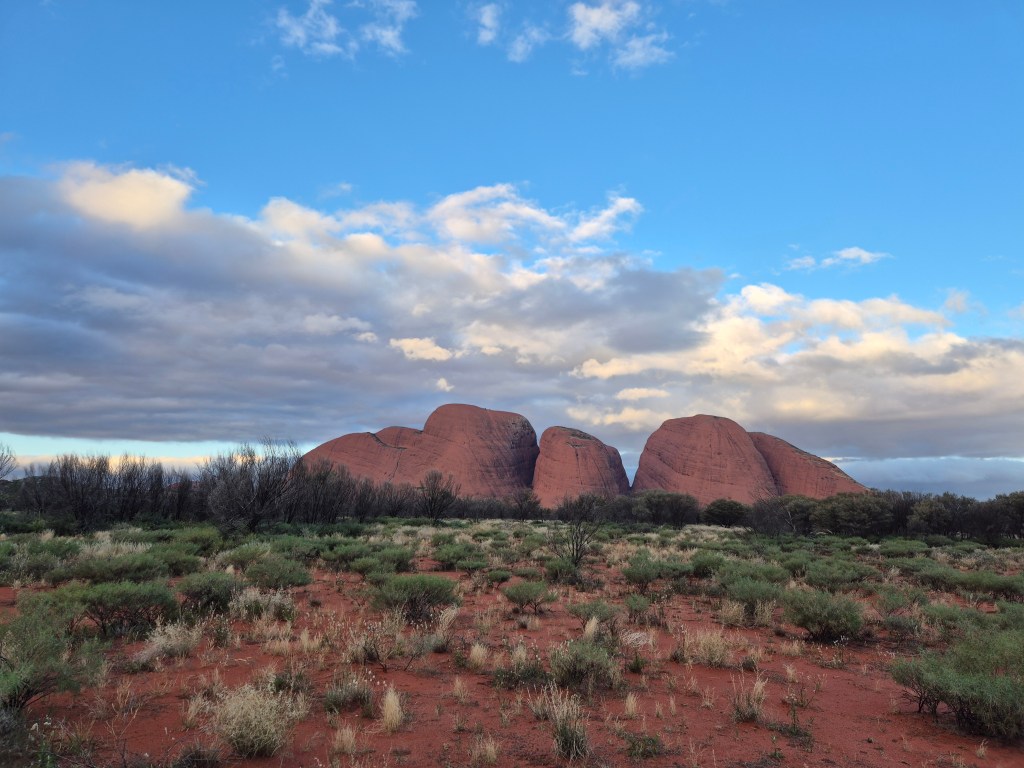
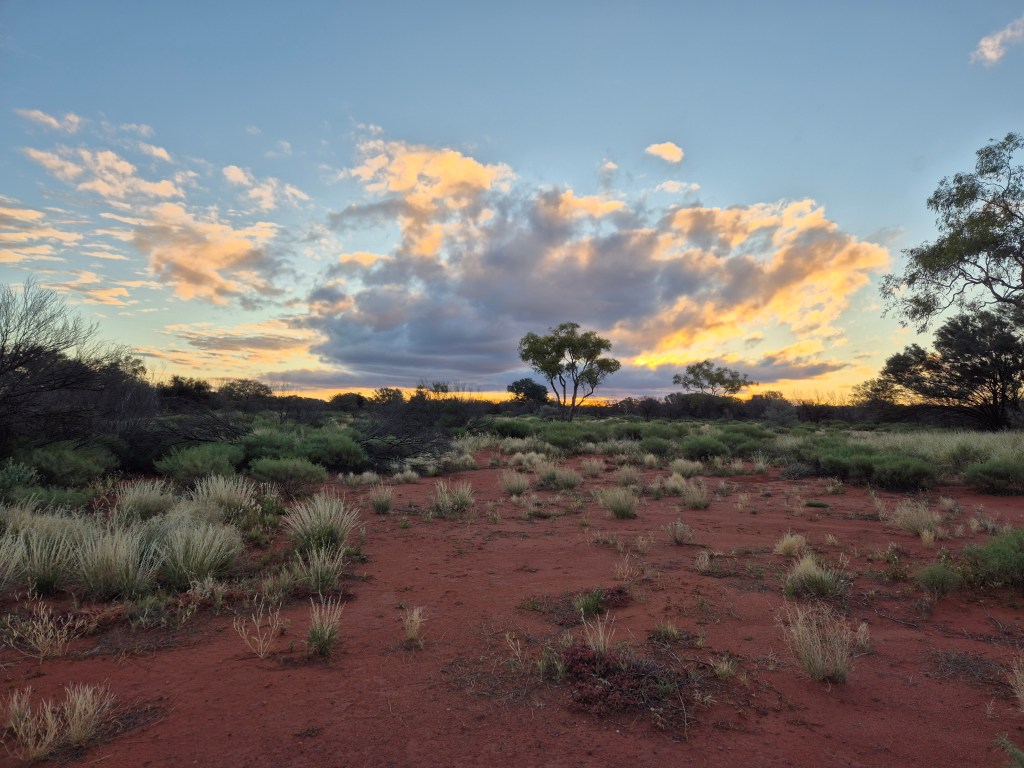
The big mission the following day is to walk the Valley of the Winds trail.
Heading up through the domes one can only be awestruck by the sheer majesty of this place. Sure there is rock scrambling and climbing, but being here is well worth it. It’s time to head down into the pound, which is surrounded not by mountains but massive domes.
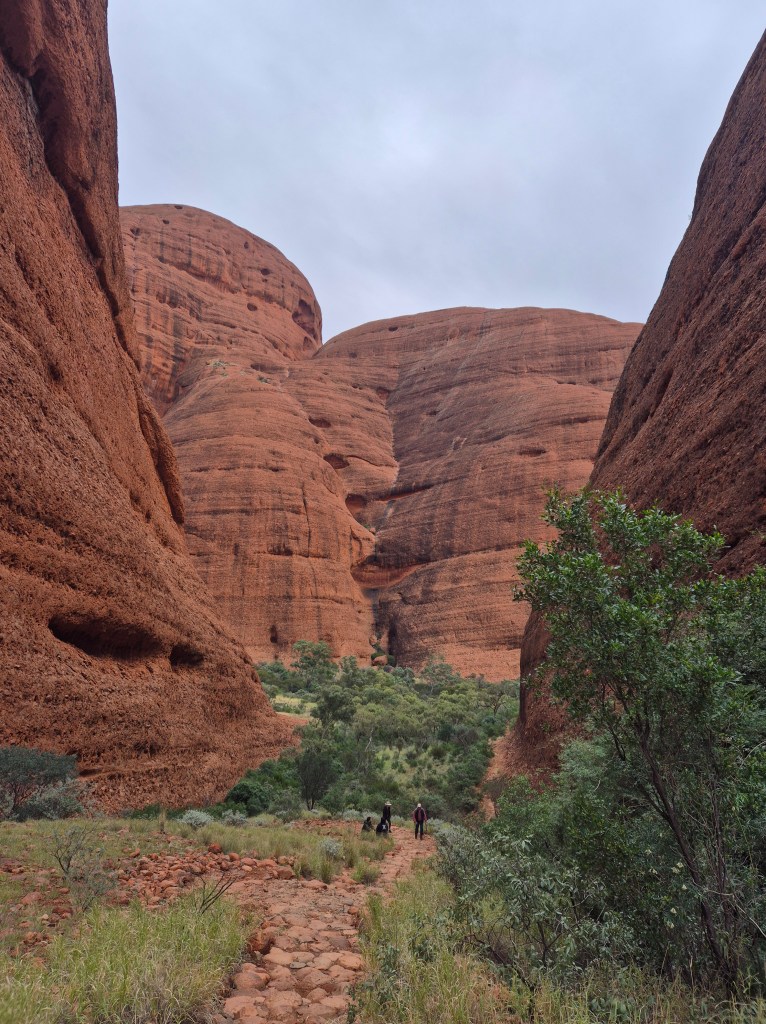
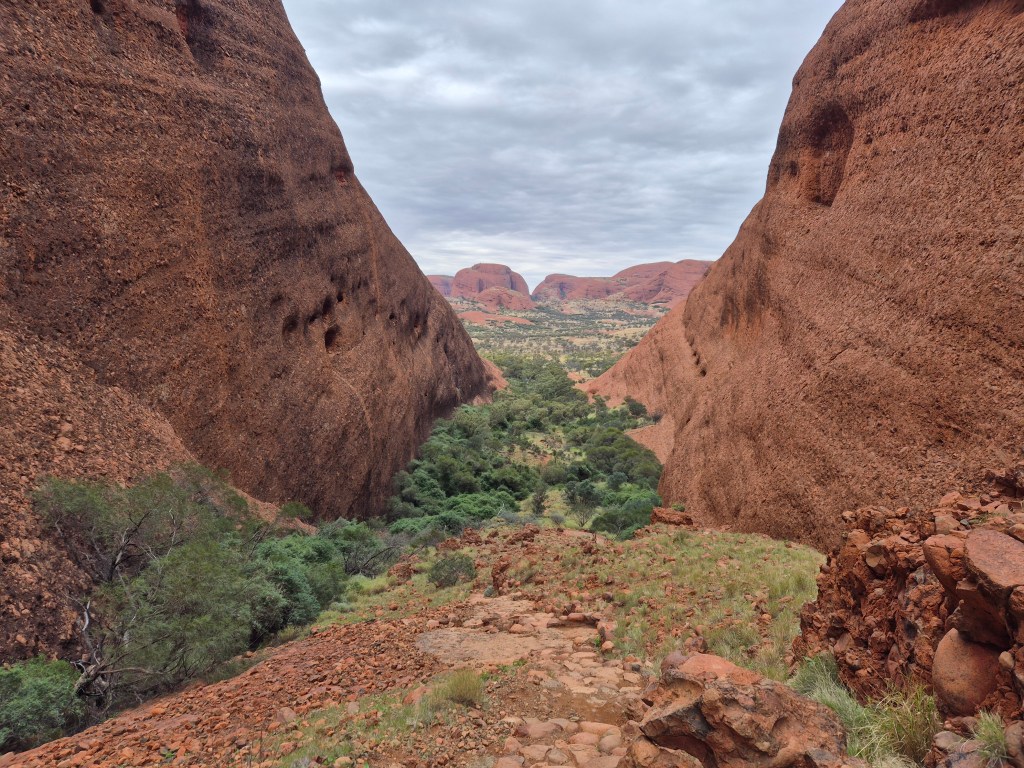
Under normal circumstances these would be bathed in sunshine and bright orange in colour, but as you can see its cloudy. Still, it’s an impressive walk all the same.
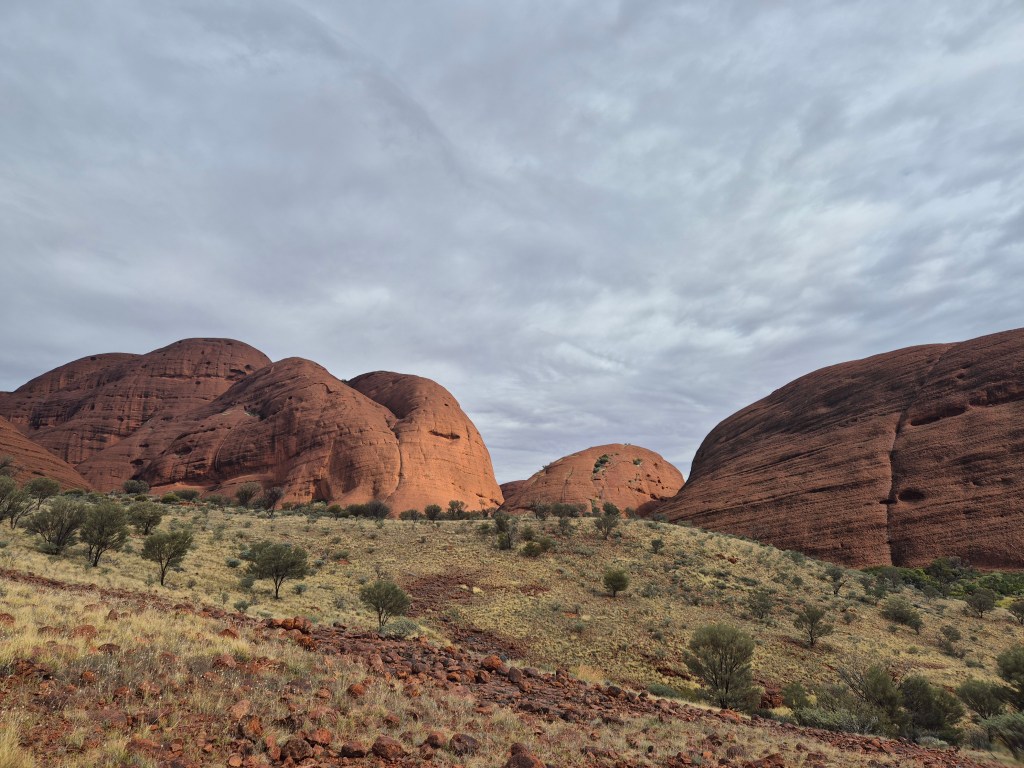
Heading home we appreciate the changing moods of Uluru as the sun does its thing.
Soon enough its time to head north to Alice Springs to reprovision for the next stage of our trip which will be a visit to Palm Valley which resides in the Finke River National Park. One enters this beautiful area via Hermannsburg being prepared for rough roads and some 4-wheel driving. High clearance vehicles are essential to negotiate both sand and very significant rocky outcrops. Happily, though it’s rough but pretty easy going to the campground as one passes the majestic rocky outcrops that form part of the Krichauf Range. Of particular note as we approach camp is our all-time favourite the Amphitheatre. But tourists generally come here to see the rare Red Cabbage Palms (Livistone Maria), which are in abundance in a single valley cradled between imposing cliffs faces further down in the valley.
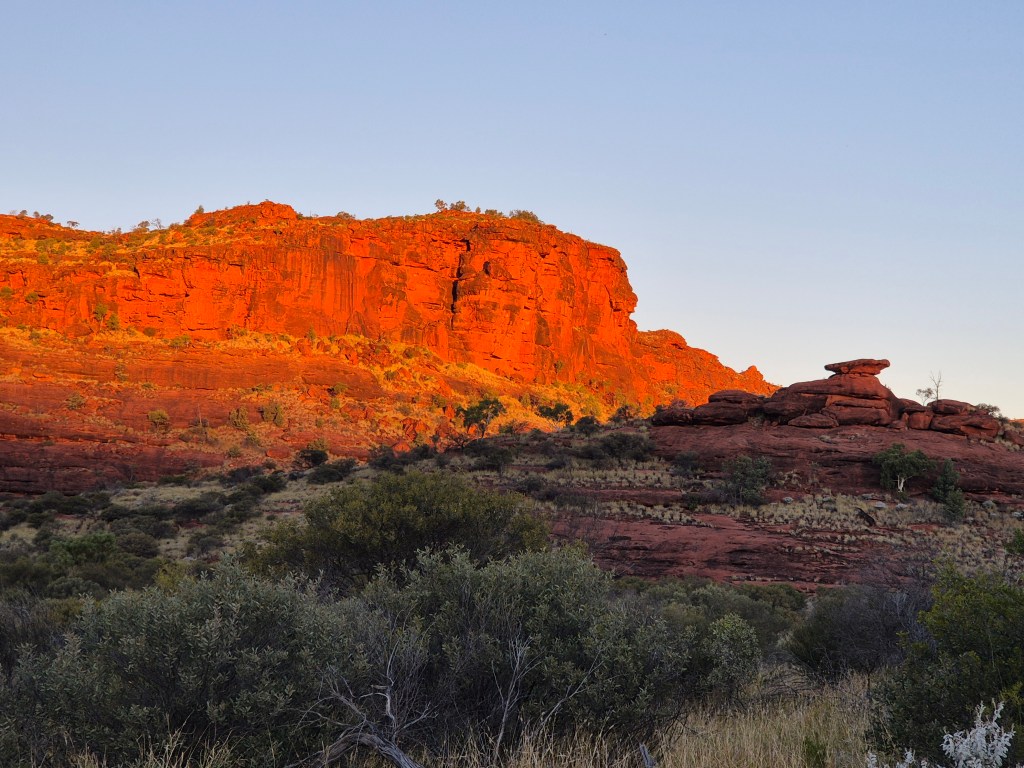
Arriving in the evening we quickly make our way towards a surrounding hill where we are treated to the effect of sunset on the Amphitheatre. This is a stunning sight which, sadly not many tourists are aware of. But having travelled to this valley from as far back as the 1970’s we ensure we are well positioned to see the huge rocky outcrops turn orange as the last rays of the setting sun strikes them. Stunning to say the least.
Week 3
The next day it’s a walk around the back of the pound to a high position where one then walks towards the significant features to be seen. Historically I confess we have given these quirky names, but daresay these are no longer appropriate.
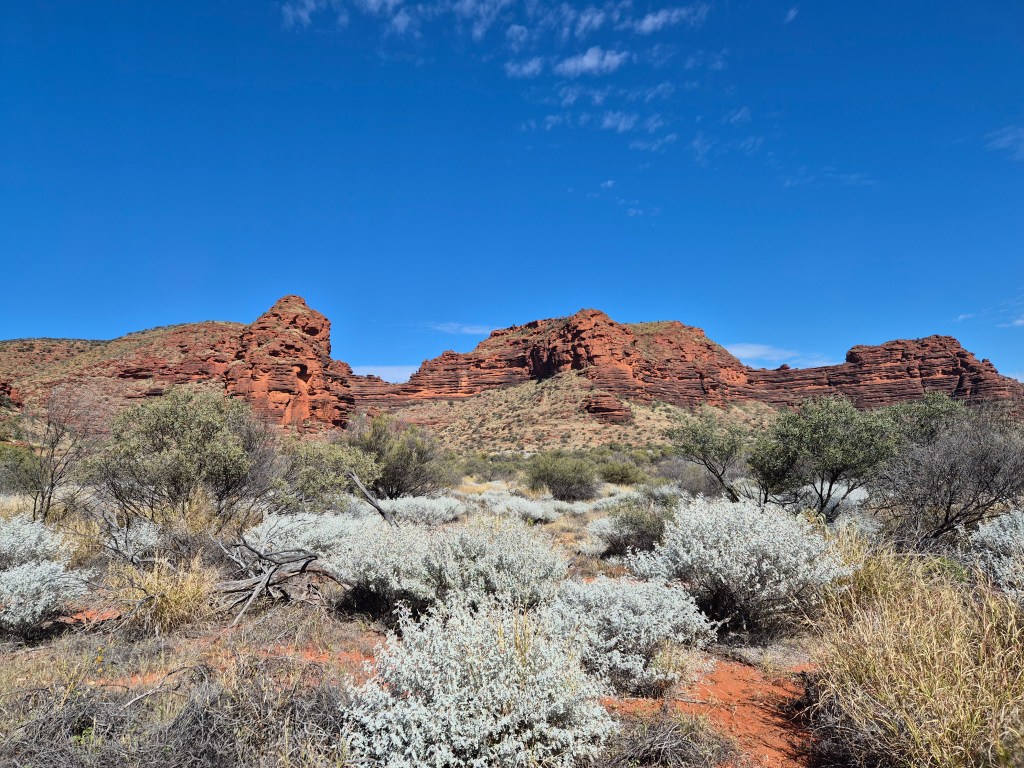
Then into Palm Valley itself. I must state this is not a pleasant drive as one must negotiate large rocky outcrops that really test ones 4*4 mettle. Once in the valley though it’s to see the wonderful palms at their best. Over the years I have seen them looking less splendid as drier conditions have prevailed, but at the moment they are magnificent and I am delighted to see so many young plants. These palms are rare Red Cabbage Palms or Livistona Maria. The closest relatives are in Katherine way way north. They are a mighty thing to see as they line the canyon in great numbers.
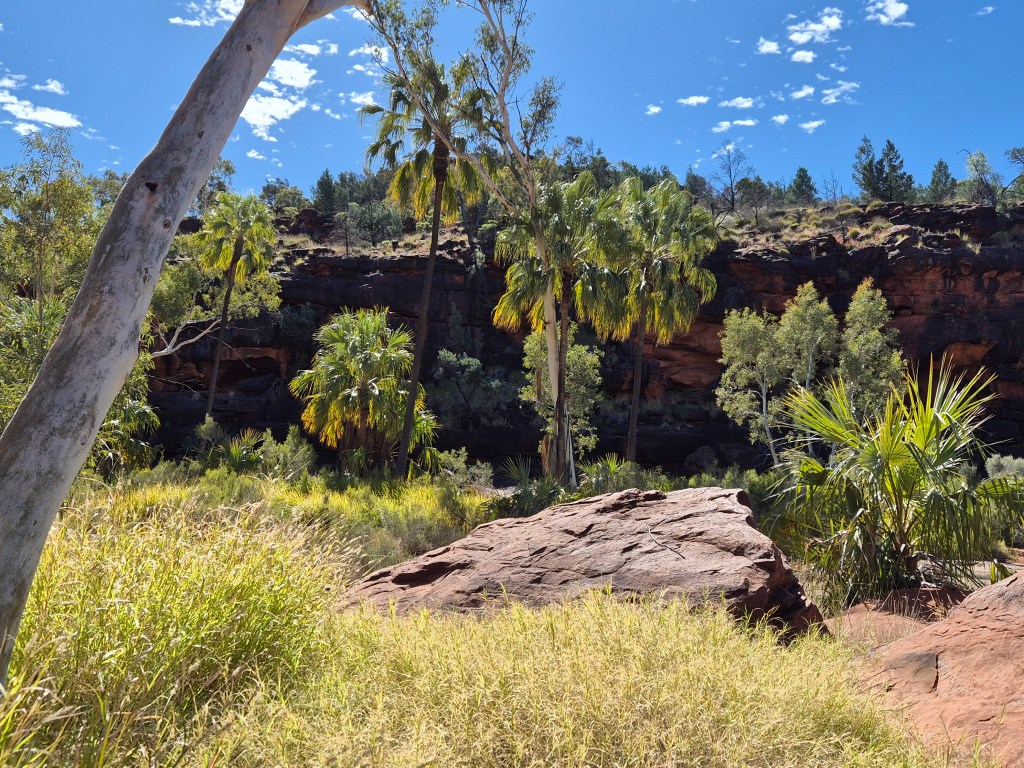
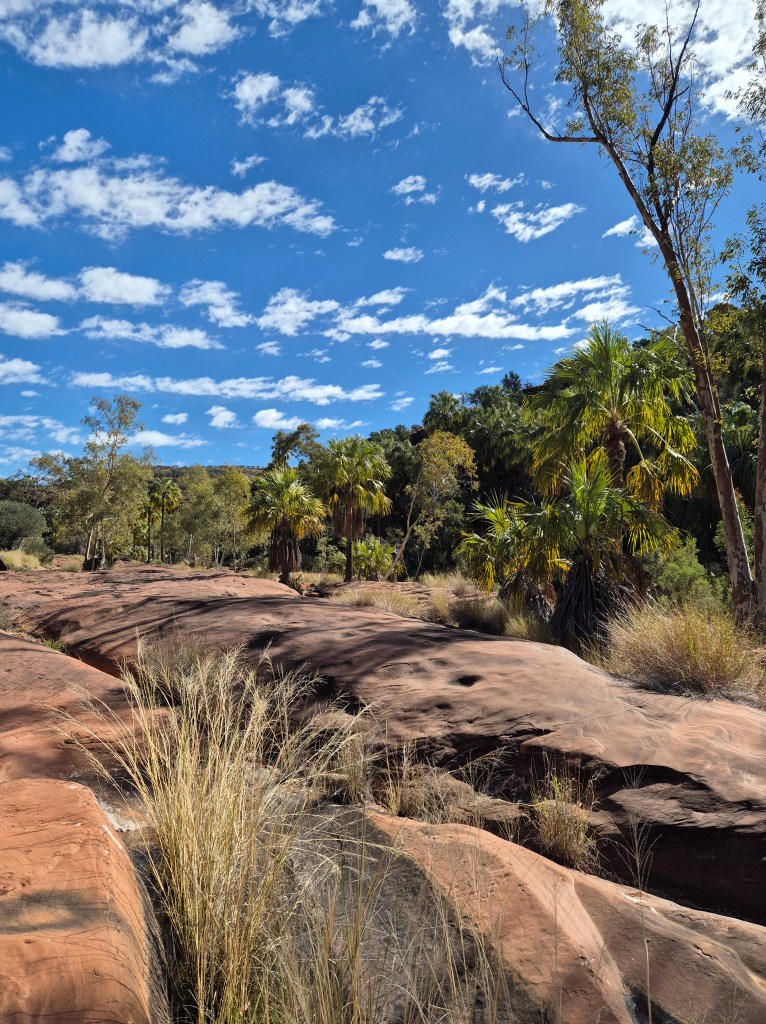
So it’s a walk way down into the valley and then back out crawling the vehicle over nasty rocks to Cycad gorge. This is a long wide cliff face which is semicircular in nature but which sports lots of cycads that make it look quite special.
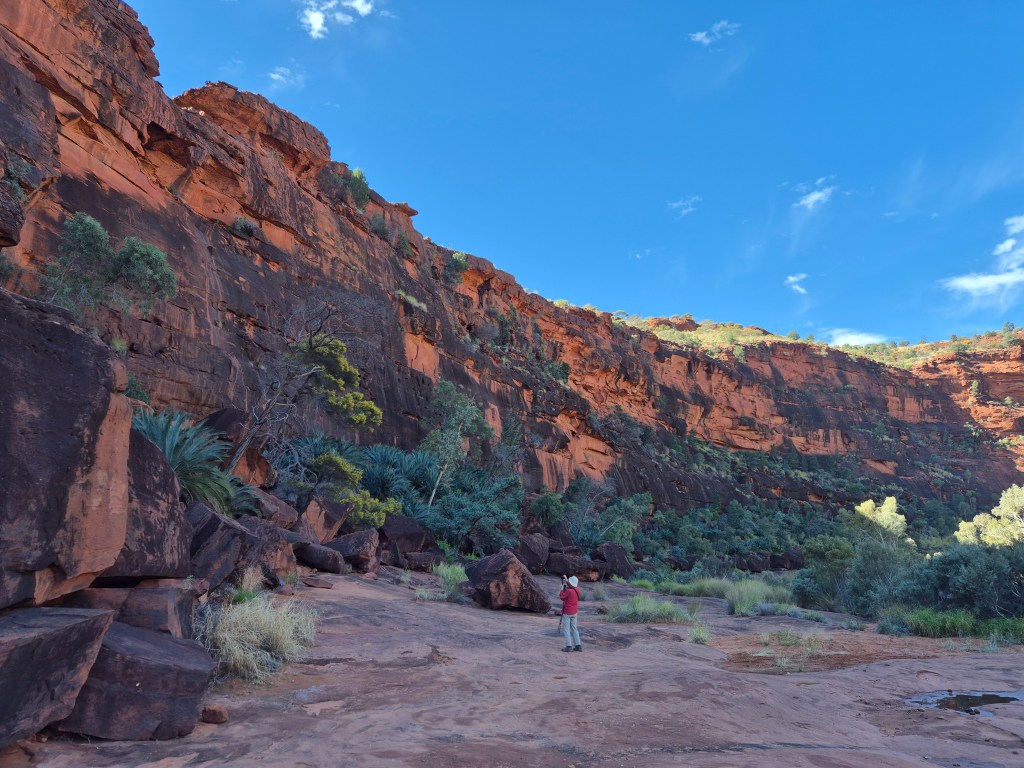
That evening as the sun sets I walk across and towards the back of the Ampitheatre as I have never had the time to do this before. The vistas are well worth it as you can see.
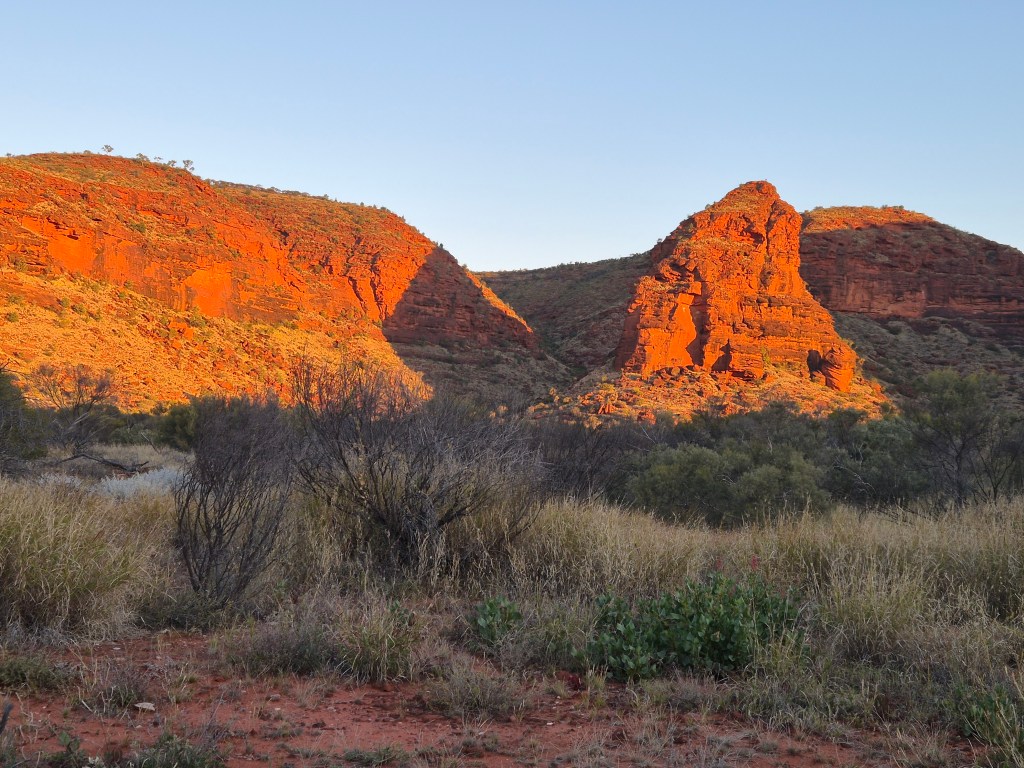
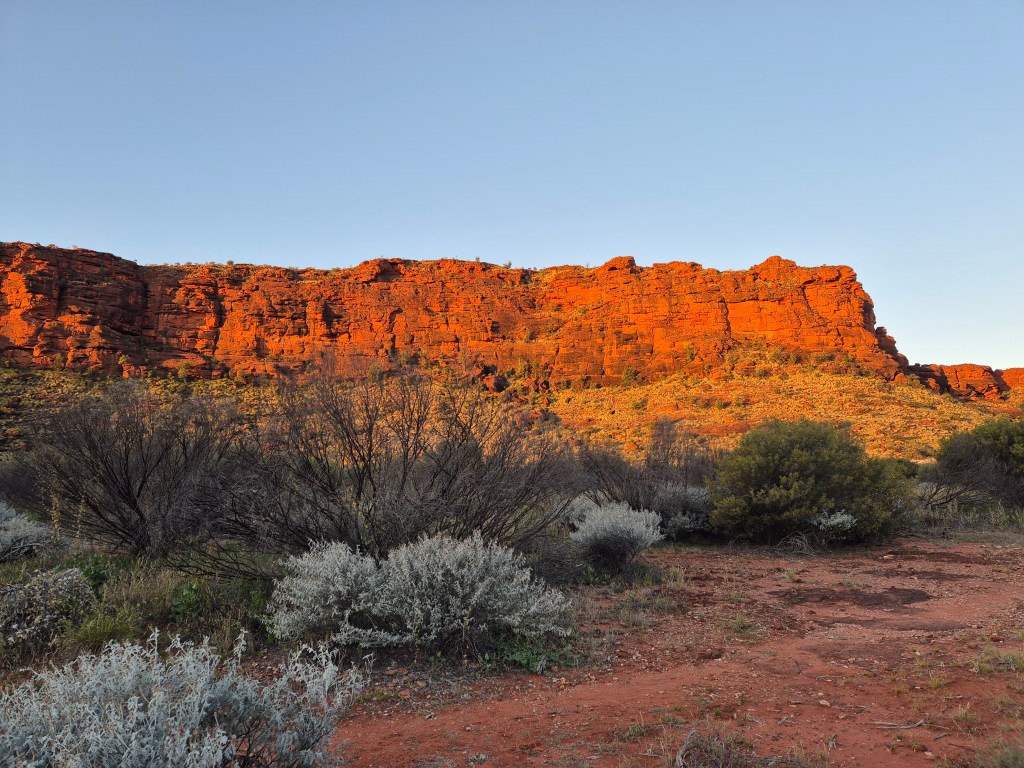
We are out walking again today but later on must take our leave of Palm Valley to make our way to Alice Springs to reprovision, charge of phones, tablets etc in readiness for the Western Mac Donnells and in particular Redbank Gorge our base camp for the next few days. This Gorge is at the western end of the famous Larapinta trail a 235km walk from Alice Springs. Its rugged and taxing for backpackers, but from personal experience I can say (in my humble opinion) the best distance walk in Oz. The scenery is magnificent.
Redbank Gorge sits next to Mt Sonder which is the last accomplishment to be achieved on the trail. I have probably said before that this is my favourite mountain in the NT. Having climbed it so many times before I never cease to enjoy the experience. Years past before the official Larapinta trail was formed, we used to camp at the side of the mountain and use our binoculars to guess the best approach up to the top. No need for that now of course.
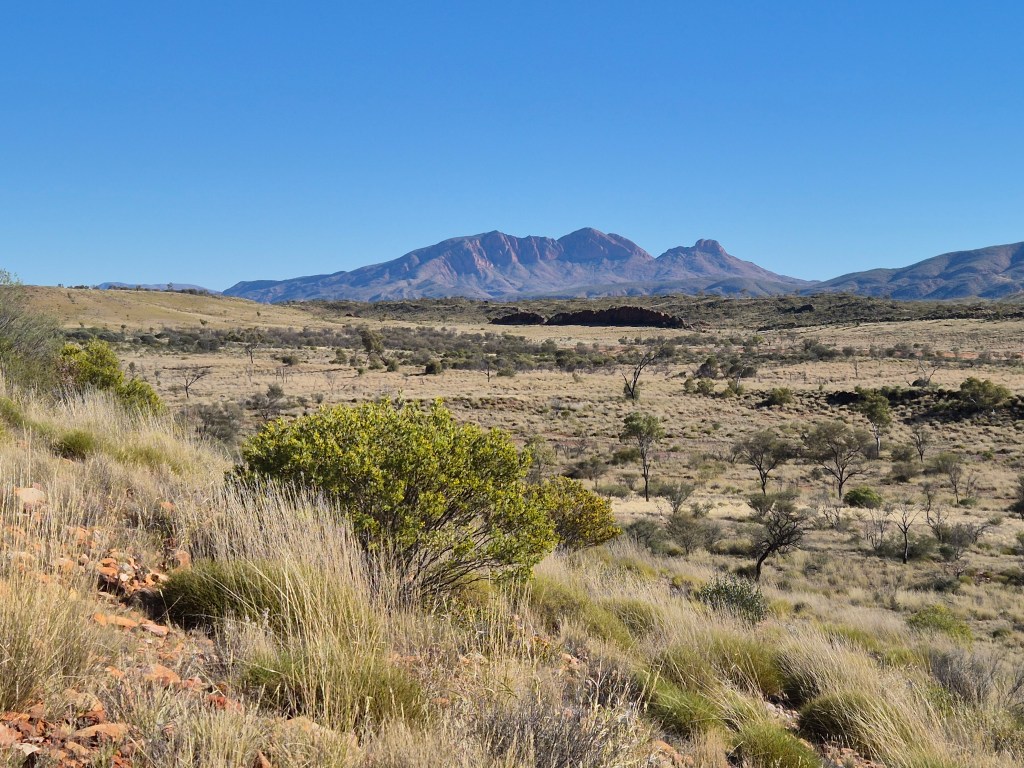
Heading back to Ormiston Gorge the next day we wander around and up to get some of the nice views.
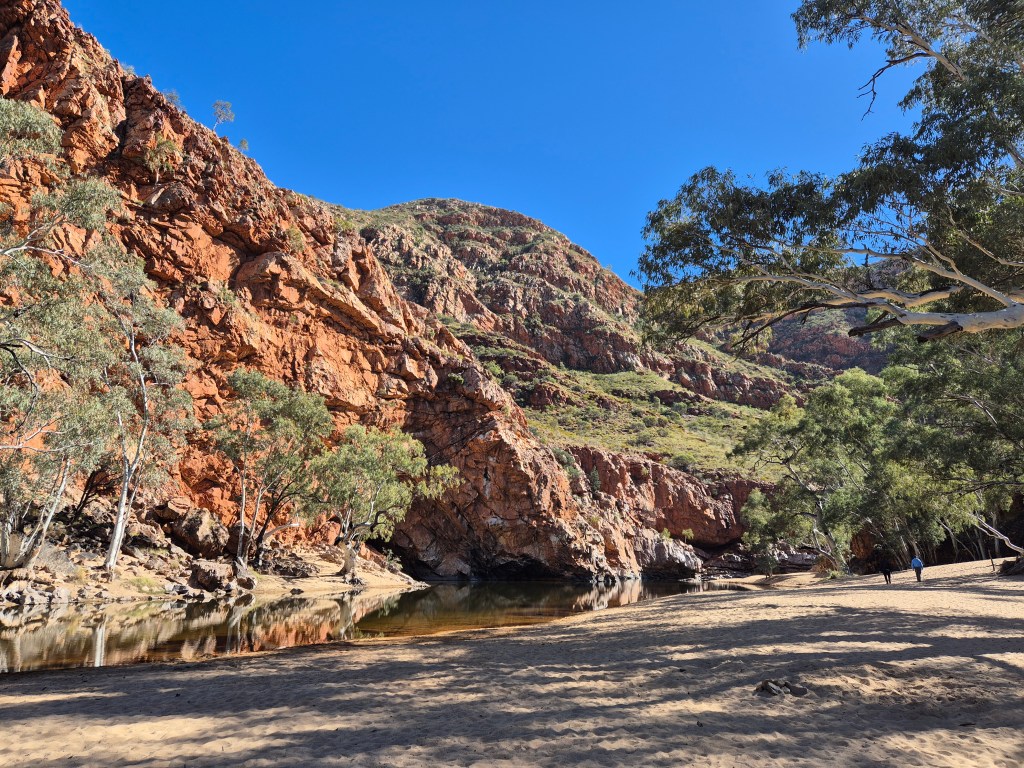
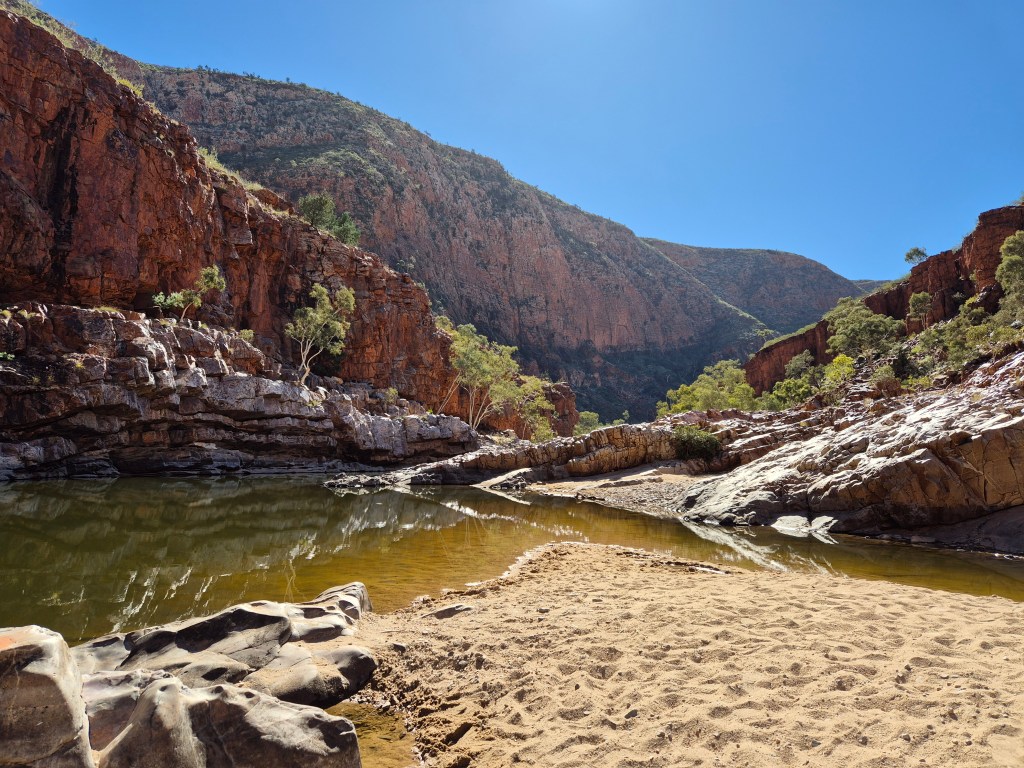
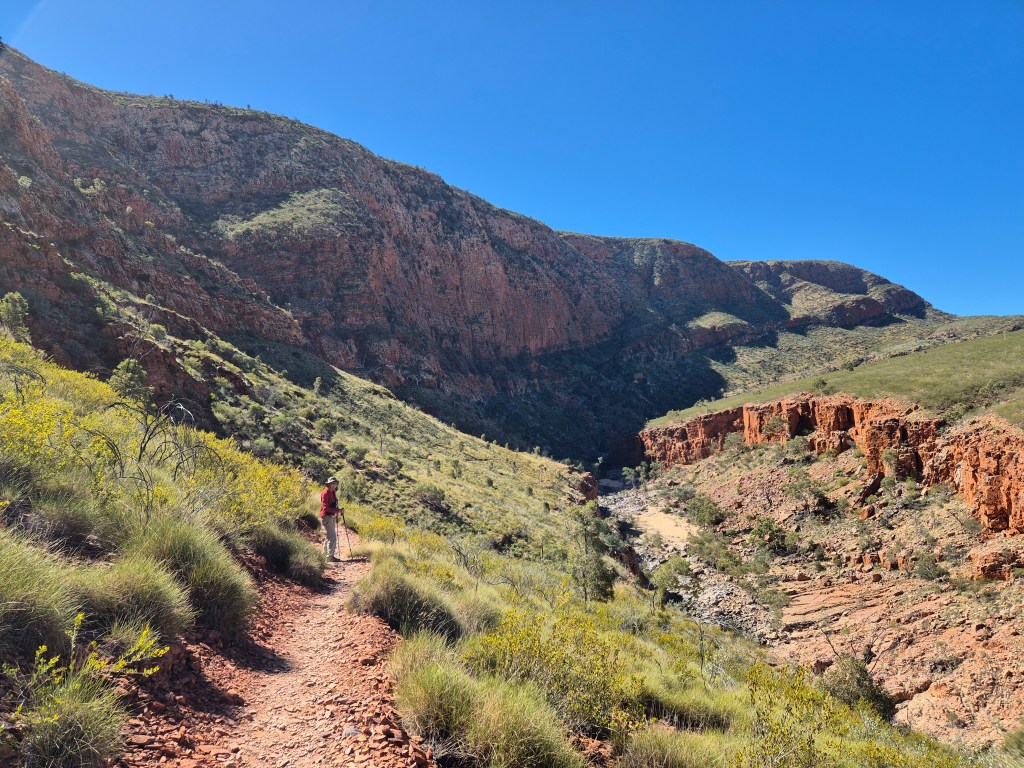
You can see this gorge is quite extensive and we determine to undertake the pound walk the next day. But this time around we do not intend to walk all the way from the east to west of the gorge as we have been told the recent rains have left very deep watery areas that need to be swum across. We are happy just to get down to the eastern entrance and make our way back again.
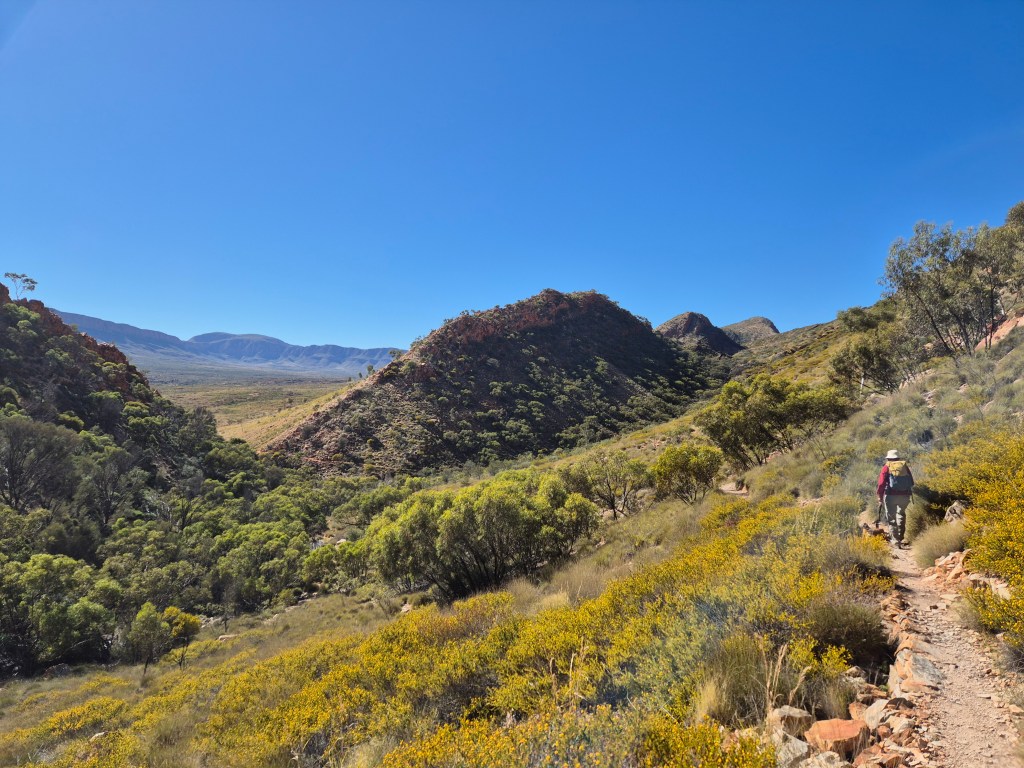
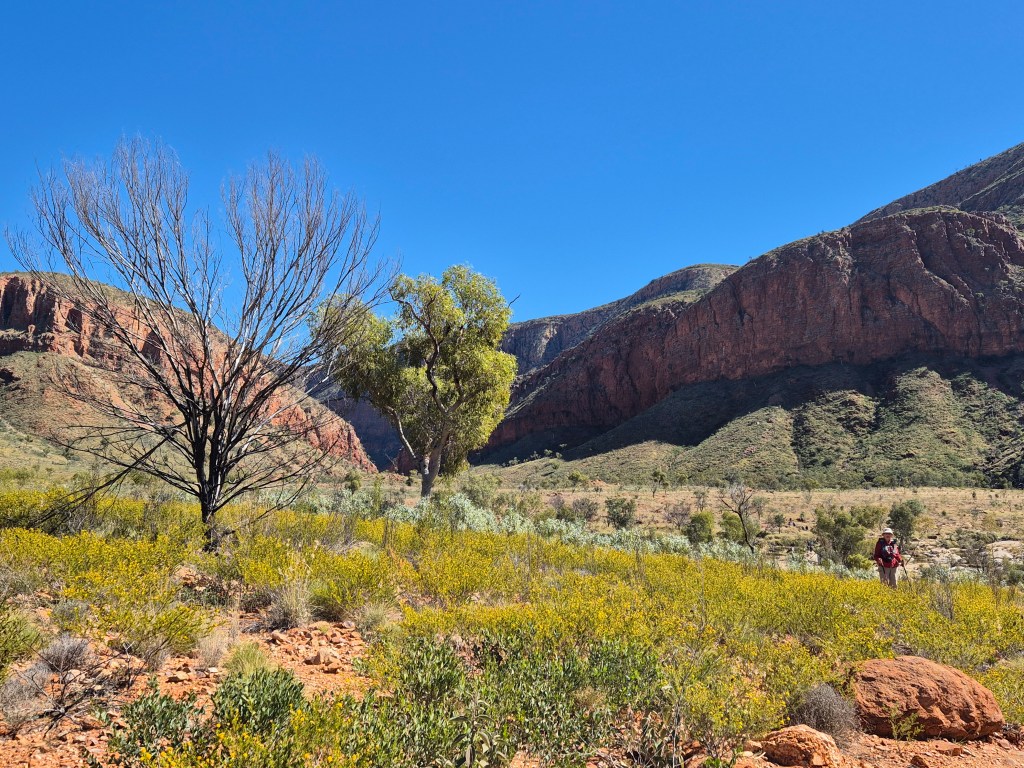
Wildflowers abound and include many varieties of Wattle, Senna, Wild Tomatoes, Desert Roses and just so many other delights. You may be interested to know that the peak on the right-hand side in the distance is Mt Giles. It comes into its own as one descends into the pound.
Week 4
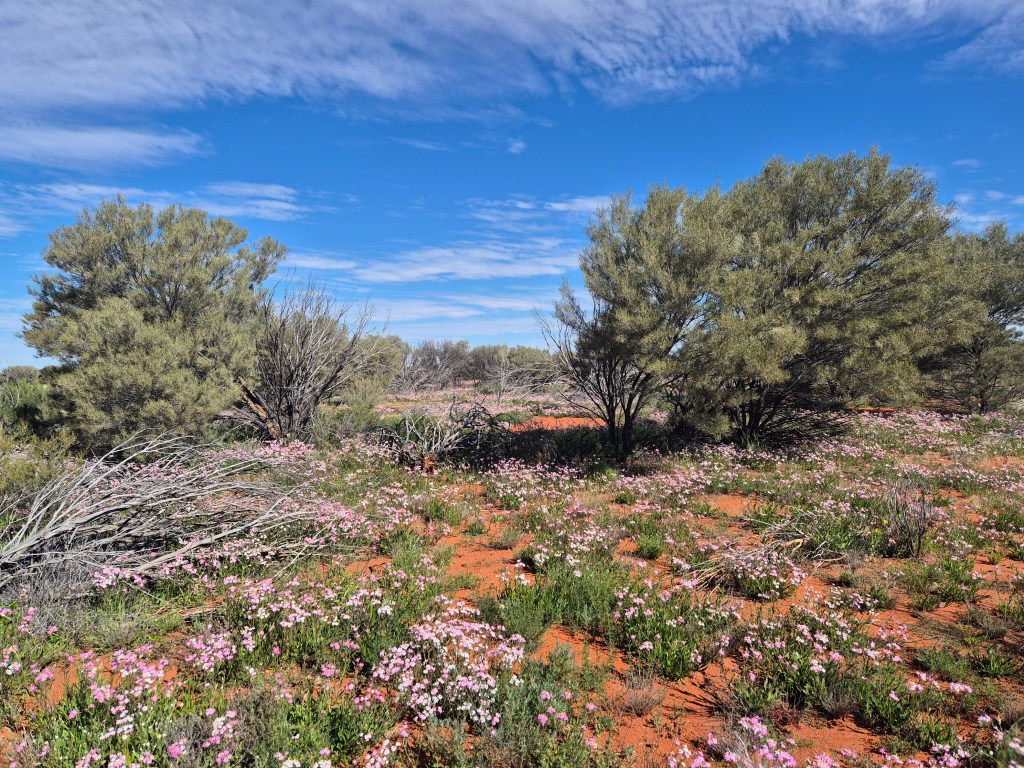
Time is passing and we must pack up camp after several nights to head back to the cloudy zones down south. En route one cannot help but notice that the wildflowers have decided to appear in the intervening weeks.
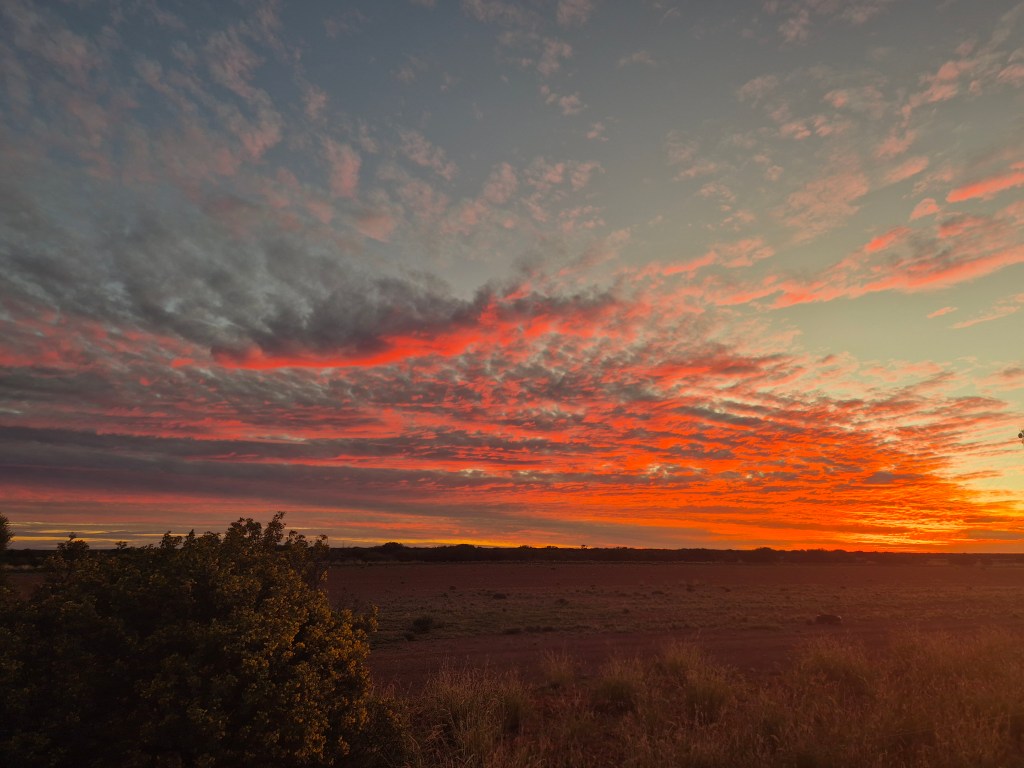
Reaching Cadney Homestead we are delighted to see our last sunset of the trip. Sadly these broad vistas will soon disappear as we move further south.
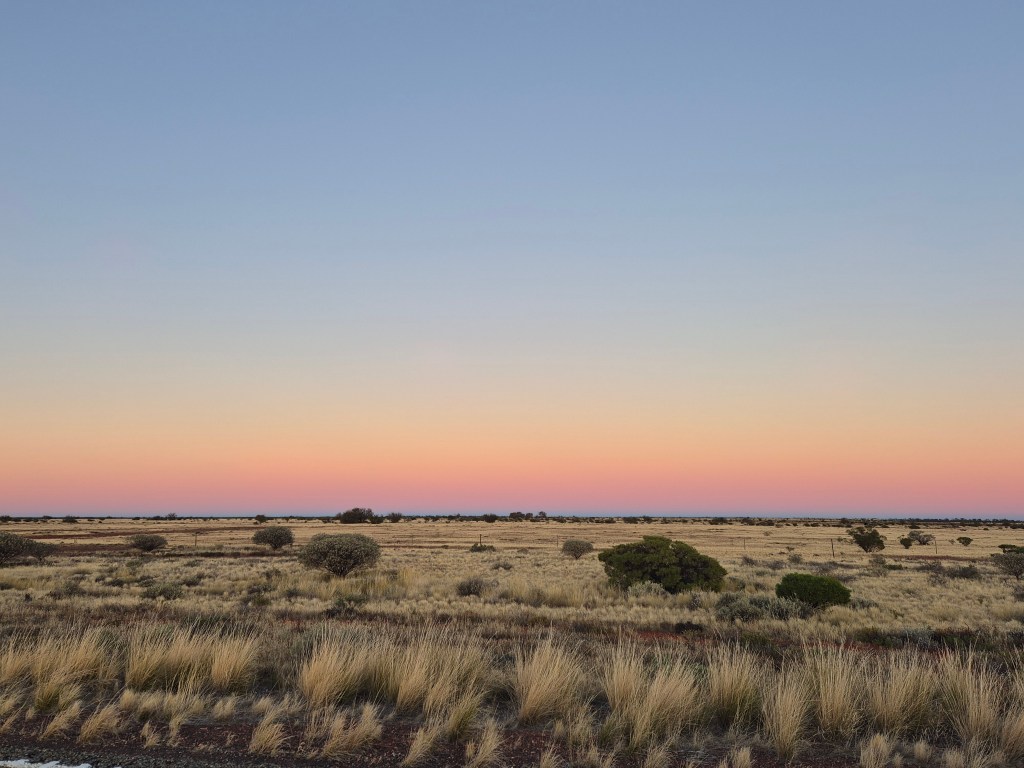
The picture on the right was taken this morning at dawn. It shows the pink and blue of the horizon that is a sign of a cold atmosphere. At dusk this can be far more pronounced, and if seen always means a near or below zero night….just warning you!
Tonight we are at Pimba near Woomera and by tomorrow night will reach Boolgun and my Riverland property for the big “clean up” the next day. Camping can be a rather messy business, although very enjoyable.
I guess we need to return to civilisation at some point.
For interest we probably will have travelled about 6000kms and the cost of this trip will be minimal because we mostly camp in national parks. The biggest cost is therefore fuel.
 Tramping and Camping